
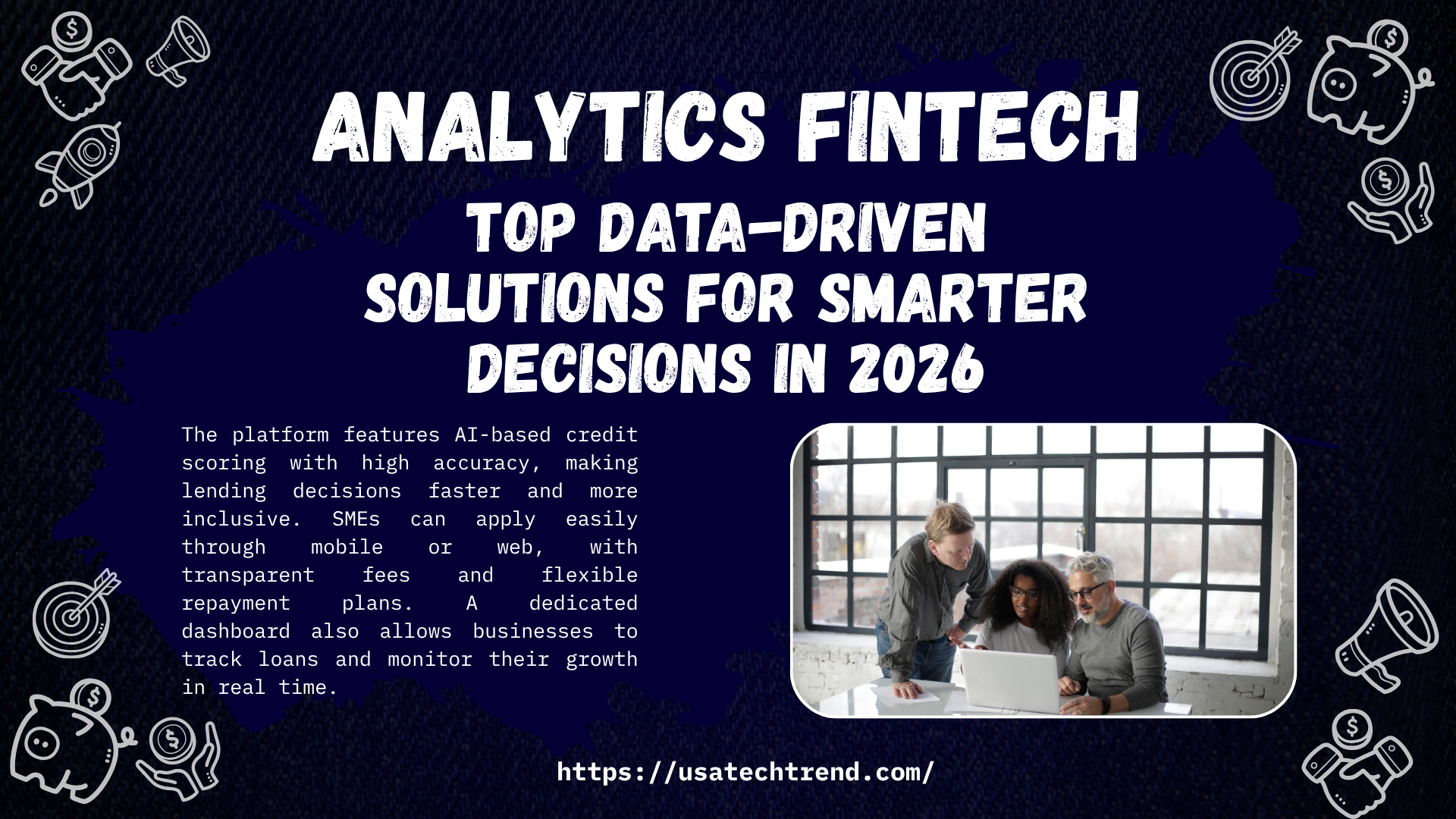
Analytics Fintech transforms raw financial data into actionable intelligence using data analytics, machine learning, and real-time business intelligence.
This article explains what analytics fintech is, why it matters for banks, neobanks, and fintech startups, and how to implement it responsibly to capture value while maintaining compliance and trust.
What Analytics Fintech Is and How It Works
Analytics fintech combines financial technology and advanced analytics to power decision-making across lending, payments, fraud detection, and wealth management.
At its core it uses big data, predictive analytics, and AI-driven models to analyze customer behavior, market signals, and operational metrics in real time.
Key components of analytics fintech
Data ingestion: aggregating transactional, behavioral, and third-party data streams.
Processing & storage: cloud data warehouses and data lakes optimized for scale and query speed.
Modeling & ML: supervised and unsupervised models for scoring, segmentation, and anomaly detection.
How analytics fintech integrates with financial systems
APIs, event streaming, and microservices connect analytics engines to core banking, payment rails, and CRM systems.
This integration enables automated decisioning and real-time alerts that improve customer experience and reduce operational risk.
Why Analytics Fintech Matters Today
Financial institutions face tighter margins, higher regulatory scrutiny, and shifting customer expectations.
Analytics fintech boosts revenue, reduces costs, and improves compliance by enabling data-driven decisions and personalized services.
Strategic advantages
Faster credit decisions, proactive fraud prevention, dynamic pricing, and personalized product recommendations.
Increased operational efficiency and better stress-testing for risk management and capital planning.
Market drivers
Open banking, embedded finance, and accessible AI tooling accelerate adoption.
Demand for real-time insights and explainable models is pushing analytics fintech into mainstream deployments.
Key Features and Services in Analytics Fintech
Leading analytics fintech offerings bundle data engineering, analytics, and application layers into productized services.
Here’s a breakdown of core features and services commonly available.
Real-time analytics and streaming
Processes events as they happen for instant fraud alerts, liquidity monitoring, and dynamic recommendations.
Predictive analytics and credit scoring
Alternative data and ML models deliver better credit risk profiles for thin-file customers and SMEs.
Behavioral analytics and personalization
Customer segmentation and journey analytics enable tailored offers and retention strategies.
Regulatory reporting and compliance analytics
Automated aggregation and lineage tracking improve auditability and reduce compliance costs.
Explainable AI and model governance
Tools for model interpretability, versioning, and performance monitoring help meet regulatory expectations.
Benefits of Analytics Fintech
Adopting analytics fintech yields measurable improvements across product, risk, and operations.
- Improved decision speed and accuracy
- Reduced fraud losses and operational risk
- Higher customer lifetime value through personalization
- Lower cost-to-serve via automation
- Better regulatory compliance and audit trails
Comparison: Analytics Fintech Platforms
This table compares typical platform categories for analytics fintech: cloud-native platforms, specialized vendors, and in-house solutions.
| Criteria | Cloud-native platforms | Specialized analytics vendors | In-house solutions |
|---|---|---|---|
| Speed to deploy | High | Medium | Low |
| Customization | Medium | High | Very High |
| Cost | Pay-as-you-go | Subscription | CapEx + Ongoing |
| Regulatory readiness | Depends on config | Often tailored | Controlled by bank |
| Scalability | High | High | Variable |
Expert Insight on Analytics Fintech
Expert perspective: blending domain expertise with strong data governance is the single biggest success factor.
Senior analytics leaders recommend starting with high-impact use cases like fraud detection and credit scoring, then scaling to personalization and treasury optimization.
Best practices from practitioners
Invest in data quality and lineage first. Reliable models depend on clean, well-documented inputs.
Create cross-functional squads with risk, compliance, and product to accelerate adoption and ensure safe deployment.
Hiring and skills
Look for data engineers, ML engineers, and domain-savvy data scientists who understand financial product design.
Complement technical hires with compliance specialists to operationalize explainability and auditability.
Use Cases for Analytics Fintech
Analytics fintech spans retail banking to capital markets, with dozens of high-value use cases.
Here are the most commonly implemented examples that drive ROI.
Fraud detection and AML
Real-time scoring and network analytics detect sophisticated fraud rings and suspicious money movements.
Credit underwriting and loan optimization
Predictive models and alternative data open access to underserved customers while limiting portfolio risk.
Personalized banking and recommendations
Behavior-driven offers increase conversion and retention through tailored pricing and product bundles.
Liquidity and treasury analytics
Forecasting tools improve liquidity management and optimize short-term funding decisions.
Churn prediction and customer retention
Early-warning signals allow targeted interventions and lifecycle marketing to reduce attrition.
Pricing and Cost Overview for Analytics Fintech
Pricing varies by vendor type and deployment model: SaaS, managed services, or on-premises license.
Below are typical cost components and ballpark ranges to plan for.
Common cost components
- Platform subscription or license fees
- Data storage and processing (cloud compute)
- Implementation and integration services
- Model development and ongoing maintenance
- Compliance and security audits
Ballpark pricing scenarios
SME fintechs: $5k–$20k/month for SaaS analytics packages and basic ML models.
Mid-market banks: $50k–$250k/year plus integration; may include per-seat or per-query charges.
Large banks: Multi-hundred-thousand to multi-million annual spend for enterprise deployments and custom model governance.
Common Mistakes When Implementing Analytics Fintech
Avoid these pitfalls to accelerate outcomes and reduce rework.
- Rushing to model development without fixing data quality
- Neglecting explainability and compliance requirements
- Underestimating ongoing monitoring and model drift
- Isolating analytics from product and risk teams
- Overfitting models to historical crises without stress scenarios
Future Trends in Analytics Fintech (2026 Outlook)
As of 2026, several trends will shape analytics fintech adoption and capabilities.
Trend: Regulatory-grade explainable AI
Expect stricter guidelines and market demand for transparent models that regulators and customers can trust.
Trend: Federated learning and privacy-preserving analytics
Federated models will enable better risk models using cross-institutional insights without sharing raw data.
Trend: Real-time embedded credit and payments
Embedded finance will rely on instant scoring and decisioning to power point-of-sale credit and BNPL at scale.
Trend: Convergence of GenAI with financial analytics
Generative AI will accelerate report generation, scenario simulation, and anomaly explanation while requiring guardrails for factual accuracy.
Implementation Roadmap and Quick Start Checklist
Use this practical roadmap to move from pilot to production without common delays.
- Identify 1–2 high-impact use cases with clear ROI metrics.
- Audit and remediate data quality; implement lineage and cataloging.
- Choose a platform approach: SaaS vs. custom build.
- Deploy models with monitoring, explainability, and rollback capabilities.
- Establish governance: data, model, and change management policies.
Analytics Fintech FAQs
What types of companies benefit most?
Banks, fintech startups, payment processors, wealth managers, and insurers all benefit by improving risk decisions, customer experience, and operational efficiency.
How long does implementation take?
Small pilots can run in 6–12 weeks; enterprise-wide rollouts typically take 6–18 months depending on integration complexity and governance readiness.
What data is typically required?
Transactional data, customer profiles, behavioral events, third-party bureau data, and market data are commonly used for modeling and reporting.
How is compliance handled?
Compliance is managed through data lineage, audit logs, model explainability, and cross-functional governance that includes legal and risk teams.
What is the expected ROI?
ROI varies, but early wins like fraud reduction and faster underwriting commonly pay back within 6–18 months for focused projects.
For deeper case studies see: Affiliate Software for Fintech: Best Platforms to Maximize Partner Revenue in 2026 , SEO Fintech Services: Proven Strategies to Scale Fintech Businesses in 2026 , Law Firms Fintech: Top Legal Services Supporting Fintech Companies in 2026
Conclusion
Analytics Fintech is the strategic intersection of financial services and advanced analytics that drives faster decisions, lower risk, and better customer experiences.
Start small, prioritize data quality and governance, and scale with explainable models to unlock sustainable value.
Ready to transform your finance operations with analytics fintech? Contact our team to evaluate your highest-impact use case and next steps. Call-to-action: schedule a consultation today.
Leave a Reply