
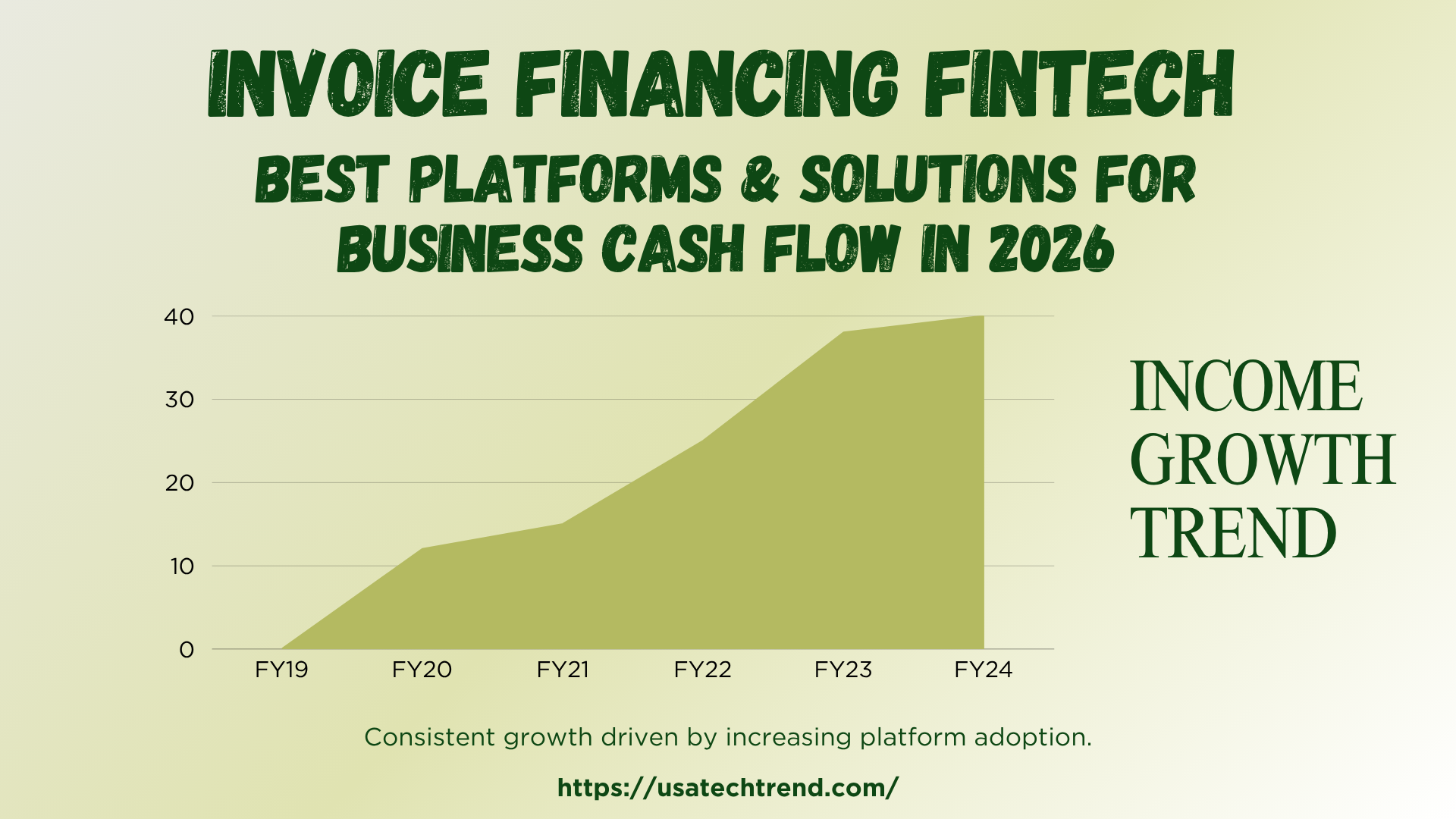
Invoice Financing Fintech transforms accounts receivable into immediate cash by using online platforms and alternative lenders to fund unpaid invoices. This guide explains how invoice finance products from fintech firms work, who benefits, and how to choose the best invoice financing solution.
We cover invoice factoring, invoice discounting, receivables financing, costs, risks, and future trends so you can decide whether this financing option suits your business.
How invoice financing work with fintech platforms
What invoice financing fintech means
Invoice financing fintech refers to digital platforms and finance companies that provide short-term financing against outstanding invoices. Rather than relying on a traditional bank loan, businesses submit unpaid invoices to a fintech lender or factoring company in exchange for immediate cash.
Types of invoice financing fintech offers
Common types include invoice factoring (where the finance company buys invoices), invoice discounting (confidential borrowing against receivables), and hybrid receivables financing that blends features of both.
Why invoice finance matters for working capital and cash flow
Why small businesses choose invoice financing fintech
Invoice finance matters because it solves cash flow issues caused by unpaid invoices and long payment terms (often 30–90 days). It provides immediate working capital so business owners can pay suppliers, payroll, or reinvest in growth.
How invoice financing provides flexible financing compared to a traditional bank
Fintech platforms typically offer faster approvals, online onboarding, and flexible credit lines tied to invoice value — making them better suited to growing SMEs than traditional bank financing in many cases.
Invoice factoring and receivables financing: Key features and services
Core features of invoice financing fintech platforms
Key features include automated invoice upload, real-time credit checks on business customers, digital contract signing, and integrated payments. Many platforms provide dashboard analytics for outstanding invoices and financing availability.
Services you’ll commonly see
Services range from non-recourse factoring (finance company assumes credit risk) to recourse factoring (business remains responsible for unpaid invoices), credit protection, collections management, and embedded business credit lines.
Benefits of invoice financing fintech
Why use invoice financing via fintech?
Fintech-driven invoice financing offers speed, convenience, and scalability. It often requires less collateral than a traditional bank loan and uses unpaid invoices as the primary asset.
- Immediate cash to cover payroll and supplier payments
- Improved cash flow visibility and forecasting
- Faster access than traditional bank loan processes
- Flexible financing tied to invoice value and sales growth
- Lower barrier to entry for established small businesses and SMEs
Invoice financing for small business: Comparison of options
Comparing invoice financing, invoice factoring, and traditional bank loan
| Feature | Invoice Factoring (Fintech) | Invoice Discounting | Traditional Bank Loan |
|---|---|---|---|
| Collateral | Unpaid invoices used as collateral | Unpaid invoices used but often confidential | Fixed assets or personal guarantees |
| Speed | 24–72 hours | 2–7 days | Weeks to months |
| Cost | Factoring fees + interest | Discount fees + interest | Lower rates but higher fees & covenants |
| Recourse | Recourse or non-recourse options | Recourse typically | Depends on lender |
| Best for | SMEs with outstanding invoices | Established businesses needing confidential finance | Established businesses with collateral |
How to qualify for invoice financing
Qualify for invoice financing: What lenders look for
Fintech lenders evaluate the quality of your receivables, the creditworthiness of your business customers, historical payment patterns, and the invoice amount. Many fintechs also check business credit, length of operation, and average invoice age.
Documents and data commonly required
Expect to provide copies of invoices, customer purchase orders, bank statements, and accounts receivable aging reports. Integration with accounting software speeds up qualification.
Invoice financing work for different business sizes and sectors
Use invoice financing across B2B sectors
Invoice financing is most common in B2B industries with predictable invoicing like manufacturing, wholesale, staffing, and professional services. It’s ideal for businesses that experience spikes in working capital needs.
Case studies and real use cases
Examples: a wholesaler bridging a 60-day payment cycle to fulfill larger orders; a staffing firm using receivables financing to meet weekly payroll; a manufacturer scaling inventory purchases to serve a new retail contract.
Pricing and cost overview for invoice financing fintech
Understanding fees and rates
Costs typically include a factoring fee (a percentage of invoice value, often 0.5%–5% depending on risk and term), interest on the advanced funds, and platform or origination fees. Non-recourse factoring is typically more expensive due to risk transfer.
How to compare financing costs
Compare effective annualized costs, factoring fees, and reserve amounts (the portion withheld until customer payment). Watch for hidden fees like minimum monthly charges or early termination penalties.
Expert insight: How fintech changes accounts receivable financing
From a finance expert’s perspective
Fintech innovators improve transparency and speed by automating credit assessments of business customers, enabling dynamic credit lines tied to real-time sales. This reduces reliance on collateral beyond unpaid invoices.
What CFOs and advisors recommend
Experts advise integrating invoice financing into cash-flow forecasting and using it as a flexible financing option, not a permanent crutch. Maintain strong credit controls and monitor factoring fees against growth benefits.
Common mistakes when using invoice financing fintech
Top errors business owners make
Common mistakes include relying solely on invoice financing for long-term capital needs, misunderstanding recourse terms, ignoring customer relationships when factoring, and failing to compare effective costs across providers.
How to avoid pitfalls
Read contracts carefully, check whether unpaid invoices as collateral create cross-defaults with existing lenders, and maintain clear communication with business customers if factoring involves collection by the lender.
Invoice financing and invoice factoring: disadvantages of invoice financing
Potential downsides to consider
Disadvantages include factoring fees that reduce margins, possible damage to customer relationships if collections are outsourced, and limits on financing for invoices from risky or new customers.
When to consider alternative solutions
If you need long-term capital for expansion, a traditional bank term loan or equity financing may be more cost-effective despite longer approval times.
Future trends: Invoice financing fintech in 2026
What’s coming in 2026
By 2026 expect increased AI-driven credit scoring, broader use of supply-chain data to underwrite invoices, tokenized receivables enabling secondary markets, and tighter integration with ERP and accounting systems for instant advances.
How this benefits businesses
These trends will lower costs, speed approvals, and allow tailored financing arrangements that adjust with sales cycles — making invoice financing provides even more flexible working capital for SMEs.
Practical checklist: Use invoice financing wisely
Steps to implement invoice financing
1. Audit your accounts receivable and identify typical invoice terms and unpaid invoice patterns.
2. Compare fintech platforms and factoring companies on fees, recourse, and customer credit assessment.
3. Pilot with a subset of invoices and track cost vs. cash-flow benefit.
Use cases: Who benefits from invoice financing fintech
Typical beneficiaries
Small businesses, SMEs, staffing agencies, manufacturers, and wholesalers commonly use invoice financing to bridge payment gaps and support growth investments without diluting equity or taking on long-term bank debt.
Specific scenarios
Use invoice financing to fund seasonal inventory purchases, meet payroll during growth, convert outstanding invoices into immediate cash for supplier discounts, or to keep production running while awaiting customer payments.
Invoice financing fintech: Pricing examples
Sample pricing scenarios
Scenario A — Short-term advance: 80% advance on a $10,000 invoice, factoring fee 1.5% (on invoice value), interest on 30-day advance. Scenario B — Longer term: 70% advance on a $50,000 receivable with non-recourse factoring fees of 3% plus platform fees.
Always calculate total cost as factoring fee + interest + platform fees, expressed as an annualized rate to compare to bank loans and credit lines.
Comparison: Invoice financing or factoring — quick summary
Which financing option to pick
Choose invoice factoring if you value speed and outsourcing collections. Choose invoice discounting for confidentiality and control over your customer relationships. Use fintech invoice financing platforms when you need fast, flexible working capital tied to growth.
Conclusion: Is Invoice Financing Fintech right for your business?
Invoice Financing Fintech offers a practical, flexible financing option for businesses facing cash flow issues from unpaid invoices. It provides immediate cash, scalability, and faster access compared to traditional bank financing.
Assess your invoice profiles, compare fintech lenders and factoring fees, and pilot a solution before committing long term. For many SMEs, invoice financing provides the working capital needed to grow without surrendering equity.
Ready to explore invoice financing solutions? Start by auditing your outstanding invoices and request proposals from at least three invoice financing providers to compare terms and costs.
How Fintechs Detect First-Party Fraud: Advanced Prevention Strategies for 2026 , Hire Fintech Developers: Complete Guide to Finding Top Fintech Talent in 2026 , Fintech VC Firms: Top Venture Capital Investors for Fintech Startups in 2026
FAQs about Invoice Financing Fintech
1. What is invoice financing fintech?
Invoice financing fintech are online platforms and non-bank lenders that provide immediate cash against outstanding invoices, using automated credit checks and integrations with accounting software.
2. How does invoice financing work with unpaid invoices as collateral?
You submit unpaid invoices to a finance company; the lender advances a percentage of the invoice value and holds a reserve until your customer pays. Advances are repaid from customer collections, minus factoring fees.
3. Can small businesses qualify for invoice financing?
Yes — established small businesses with repeat customers and predictable invoicing patterns typically qualify. Qualification depends on customer creditworthiness, invoice age, and platform requirements.
4. What are typical costs and factoring fees?
Costs include factoring fees (0.5%–5% per invoice depending on risk and term), interest on advances, and possible platform fees. Non-recourse options cost more due to credit protection.
5. Is invoice financing better than a traditional bank loan?
It depends. Invoice financing offers speed and flexibility tied to receivables, while traditional bank loans can be cheaper for long-term needs but slower and require collateral or guarantees. Compare effective annual costs and the impact on customer relationships.
Call to Action: Contact vetted invoice financing fintech providers for tailored quotes, and run a short pilot to see how receivables financing affects your cash flow and growth.
Leave a Reply