
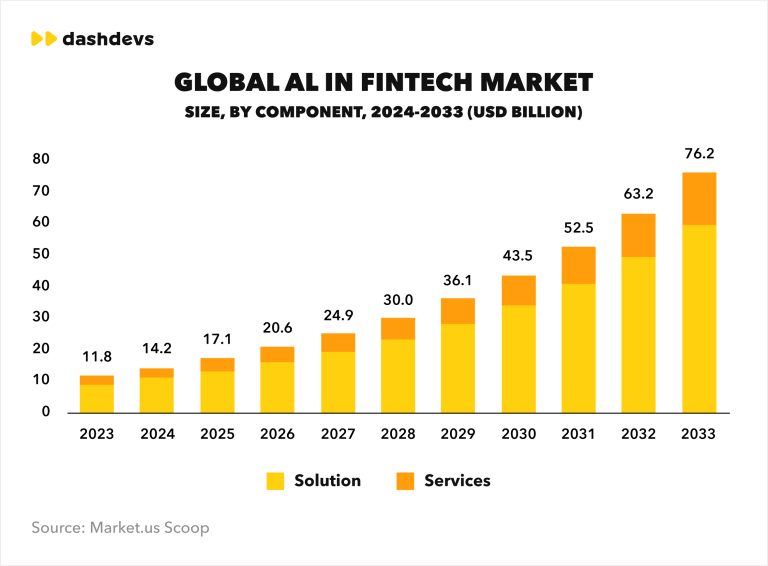
AI search analytics platforms for fintech companies are changing how financial firms find, interpret, and act on customer data. This guide explains what these platforms do, why they matter, and how to choose the best solution. It is written in simple, professional language for beginners and decision-makers who want a clear path to implementation.
What it is
An AI search analytics platform combines intelligent search with advanced analytics to surface relevant information across structured and unstructured fintech data. It uses natural language processing (NLP), machine learning, and vector search to index documents, logs, transaction records, and chat interactions so teams can query and analyze them in real time.
Core capabilities include semantic search, intent detection, anomaly detection, and dashboarding. These systems transform raw data into searchable knowledge, accelerating customer support, compliance, fraud investigation, and product intelligence.
Why it matters
Fintech companies rely on speed, accuracy, and trust. AI search analytics platforms matter because they reduce time-to-insight, improve regulatory adherence, and enhance customer experience. Instead of hunting through siloed systems, teams ask natural-language questions and receive precise answers with context and evidence.
Better search analytics also enable proactive risk management. Machine learning models surface suspicious patterns across accounts and transactions, allowing firms to stop fraud earlier and reduce losses.
Features / services / tools
Semantic search and natural language querying
Search that understands meaning, not just keywords. Users type questions like “high-risk transactions last 24 hours” and get relevant results ranked by relevance.
Real-time analytics and alerts
Live dashboards and rule-based alerts let teams monitor transactions, latency, and errors. Real-time processing supports instant decisioning for approvals and fraud checks.
Vector search and embeddings
Vector-based retrieval improves recall for unstructured data such as support chats, PDF disclosures, and news. Embeddings map content to numerical vectors to find semantically similar items.
Machine learning models
Built-in ML supports anomaly detection, customer segmentation, churn prediction, and intent classification. Models can be pre-trained or fine-tuned on proprietary fintech data.
Data connectors and ETL
Connectors integrate banking systems, CRM, data lakes, and message queues. Automated ETL pipelines ensure data freshness and schema normalization.
Security, compliance, and governance
Enterprise controls include role-based access, encryption, audit logs, and data lineage. Compliance modules support GDPR, PCI-DSS, and local financial regulations.
Benefits
- Faster investigations and approvals through instant, contextual search
- Improved fraud detection with ML-driven anomaly alerts
- Enhanced customer experience via accurate support responses
- Reduced regulatory risk with searchable audit trails
- Lower operational costs by automating routine analysis
Comparison table
| Feature | Enterprise A | Enterprise B | Open Platform C |
|---|---|---|---|
| Semantic search | Advanced | Standard | Advanced |
| Real-time analytics | Yes | Limited | Yes |
| Fraud detection models | Built-in | Marketplace | Custom |
| Data connectors | 50+ prebuilt | 20+ | Developer SDK |
| Compliance features | PCI, GDPR, SOC2 | GDPR | Optional |
| Deployment | Cloud / Hybrid | Cloud | Cloud / On-prem |
| Pricing model | Subscription + usage | Subscription | Usage-based |
Expert insight
Senior analysts note that the most effective AI search analytics platforms for fintech companies combine domain-specific models with strong data governance. Off-the-shelf NLP helps accelerate prototypes, but tuning models on proprietary transaction data yields the biggest gains in precision and recall.
Experts also emphasize interpretability. Explainable AI features—such as highlighted evidence, confidence scores, and model explanations—are essential for compliance teams and auditors.
Use cases
Customer support and dispute resolution
Search across call transcripts, emails, and CRM notes to resolve disputes faster. Agents use semantic search to find policy clauses and prior similar cases.
Fraud detection and investigations
Combine transaction analytics with behavioral signals. Alerting and case management speed investigations and reduce false positives.
Regulatory compliance and audit
Create searchable evidence packages for audits. Governance tools map data flows and maintain immutable logs for regulators.
Product analytics and personalization
Analyze feature usage and customer feedback to tailor offers. ML-driven insights identify cross-sell opportunities and optimize onboarding flows.
Risk scoring and credit decisions
Augment traditional credit models with alternative data signals extracted from documents, chat, and device telemetry.
Pricing / cost overview
Pricing varies by vendor and deployment. Common models include:
- Subscription tiers (base fee + per-seat)
- Usage-based pricing (queries, compute, storage)
- Enterprise licensing (flat fee for unlimited use)
Typical cost drivers: query volume, data retention, number of connectors, and custom model training. Small fintech teams can start with lower-tier subscriptions or usage-based trials. Larger firms should budget for integration, compliance reviews, and model fine-tuning.
Example ballpark ranges:
- Startup tier: $2k–$10k/month
- Mid-market: $10k–$50k/month
- Enterprise: $50k+/month (plus professional services)
FAQs
How does an AI search analytics platform differ from a standard BI tool?
AI search platforms emphasize semantic retrieval, natural language querying, and unstructured data understanding. Standard BI focuses on dashboards and structured data with predefined schemas.
Can these platforms integrate with core banking systems?
Yes. Most vendors offer prebuilt connectors and APIs to integrate with core banking, payment processors, CRM, and data lakes.
How do vendors handle data privacy and compliance?
Vendors implement encryption, access controls, audit logs, and data residency options. Look for SOC2, PCI-DSS, and GDPR compliance statements and contractual safeguards.
Is machine learning necessary for small fintech teams?
Not immediately. Many platforms provide useful search and basic analytics out of the box. ML becomes essential as volume grows and you need predictive insights like fraud scoring or churn prediction.
How long does implementation take?
Implementation can range from weeks for a simple pilot to 3–6 months for full enterprise rollout. Time depends on data readiness, integration complexity, and compliance requirements.
Conclusion + CTA
AI search analytics platforms for fintech companies turn scattered data into actionable intelligence. They accelerate investigations, reduce risk, and improve customer outcomes. To choose the right partner, prioritize semantic search quality, model explainability, security, and flexible pricing.
Ready to evaluate platforms against your use cases? Start with a pilot that indexes representative datasets and validates key metrics like time-to-resolution, false positive rate, and query accuracy.
Learn more about related solutions and get a tailored demo: What Are the Tools Helpful for Fintech Marketing Campaigns? or explore integration best practices for financial services: Best Embedded Payments Platforms for Regulated UK Fintechs 2025 , Fintech Engagement Strategy: Increase Retention and User Trust
Leave a Reply