
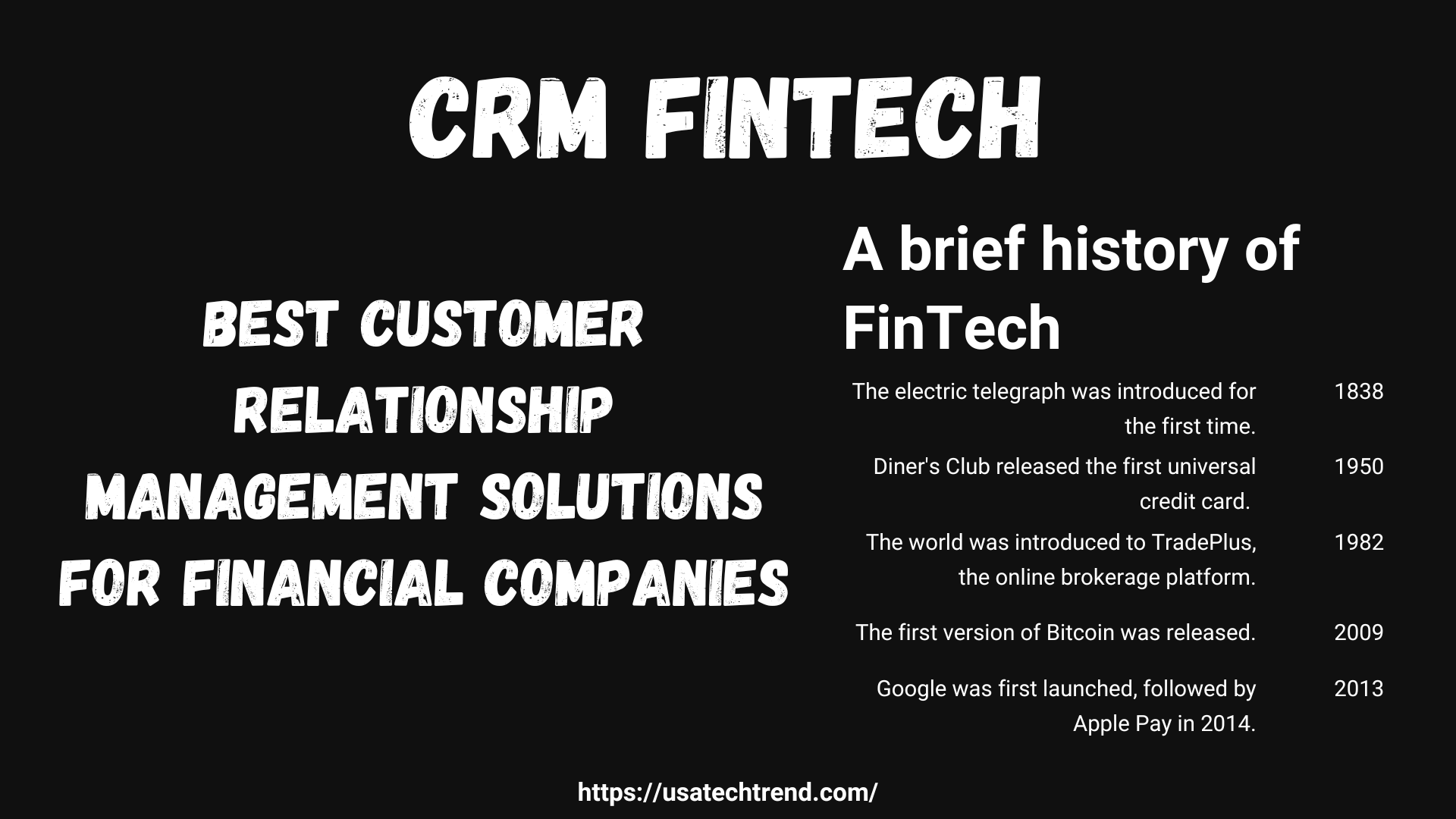
CRM Fintech is rapidly reshaping how fintech companies and financial institutions manage customer relationships, sales pipelines, and sensitive financial data. This article explains what CRM fintech is, why it matters, and how to choose and implement the right crm software for financial services.
Written for founders, product managers, financial advisors, and sales teams, this guide balances beginner-friendly explanations with high-level strategy to help you integrate crm solutions into fast-moving fintech operations.
Why crm for financial services and fintech crm solutions matter
Fintech crm solutions centralize customer data, automate workflows, and provide a single platform for sales and marketing alignment. They help fintech firms improve onboarding, reduce manual data entry, and ensure compliance with regulated financial requirements.
When properly implemented, crm helps financial businesses deliver personalized services, protect sensitive financial data, and forecast revenue with up-to-date analytics.
What CRM Fintech is: A concise definition
CRM Fintech refers to customer relationship management software tailored for the fintech industry and financial services. It combines CRM features—contact management, pipeline tracking, marketing automation—with industry-specific capabilities like KYC workflows, role-based access controls, and secure financial data handling.
Why CRM Fintech matters for fintech companies and financial institutions
Fintechs need crm platforms to stay competitive: they enable faster client onboarding, reduce manual data handling, and create a unified view of customer activity across sales, support, and product teams.
For financial institutions, crm systems help align sales and marketing, improve customer experience, and ensure compliance while empowering reps with real-time customer insights.
CRM platforms: Key features and services of fintech CRM
Choosing the right crm platforms requires understanding core and advanced features. Below are services and features typically offered in crm for financial services and fintech crm offerings.
Core CRM features
- Contact and account management with secure customer data storage and activity logs.
- Sales pipeline and forecast tools that track leads, opportunities, and revenue projections.
- Marketing automation and email marketing to create targeted campaigns and nurture leads.
- Task management and workflow automation to reduce manual data entry and followup delays.
Industry-specific fintech crm features
- KYC/AML onboarding workflows and documentation tracking for regulated financial businesses.
- Role-based access controls and encryption for sensitive financial data.
- Integration with financial planning and payment systems to capture transactions and product usage.
- Audit trails and compliance reporting tailored to financial services industry standards.
Best CRM: Benefits of CRM Fintech for businesses and reps
CRM Fintech provides measurable benefits to sales teams, customer service teams, and product teams. It empowers organizations to automate manual tasks and focus on strategic relationships.
- Improved customer experience through personalized communications and faster response times.
- Higher sales efficiency with automated lead routing, pipeline management, and forecasting.
- Reduced risk with compliant handling of sensitive financial data and clear audit trails.
- Better decision-making using integrated analytics and real-time dashboards.
- Lower operational costs by minimizing manual data handling and duplicate systems.
CRM systems comparison: 5 best fintech crm platforms and pricing overview
Below is a comparison table showing common crm platforms used by fintechs and financial advisors, focusing on features, integrations, and a general pricing range. Use this as a starting point when evaluating the right crm solution.
| Platform | Industry-Specific Features | Integrations | Best for | Typical Pricing |
|---|---|---|---|---|
| Salesforce Financial Services Cloud | Wealth management objects, compliance tracking, role-based security | Payment processors, core banking, analytics | Large financial institutions, enterprise fintechs | $150–$300+/user/month |
| HubSpot + Fintech Integrations | Marketing automation, CRM basics, easy integrations | Accounting, payment gateways, customer portals | Growth-stage fintechs, marketing-driven teams | $50–$200+/user/month |
| Pipedrive with fintech addons | Pipeline-first CRM, simple automation | Payments, document signing, analytics | Sales-focused fintech companies | $15–$75+/user/month |
| Microsoft Dynamics 365 Finance | ERP/CRM hybrid, finance-focused compliance | Banking systems, enterprise tools | Financial institutions, regulated firms | $95–$210+/user/month |
| Specialized Fintech CRM (industry-specific) | KYC workflows, encrypted storage, audit logs | Core banking, onboarding, payment rails | Fintech firms handling sensitive financial data | $40–$150+/user/month |
Pricing varies with the number of users, level of customization, and compliance features. Many crm platforms offer tiered pricing or enterprise quotes for heavy integrations.
CRM features: Expert insight on selecting and integrating CRM Fintech
Expert takeaway: the right CRM Fintech is not the most feature-rich out of the box but the one that integrates securely with your tech stack and supports financial workflows.
Experts recommend prioritizing ease of use, ability to automate repetitive tasks, and strict access controls. Look for crm platforms that offer clear onboarding tools and strong analytics to forecast financial goals and sales performance.
Key questions experts ask before recommending a crm
- Which sensitive financial data must the CRM store and how is it encrypted?
- Can the CRM integrate with payment processors, accounting, and core banking systems?
- Does the platform offer role-based access and compliance reporting for audits?
- How will the CRM automate onboarding, followup, and routine financial workflows?
CRM for financial: Use cases and real-world examples for fintechs
CRM Fintech supports a wide range of use cases across financial businesses. Below are practical examples that show how crm improves customer interactions and internal efficiency.
Use case: Digital onboarding for personal finance apps
Automated KYC workflows streamline onboarding, validate identity documents, and route exceptions to compliance teams. This reduces manual data handling and accelerates account activation.
Use case: Wealth management and advisory firms
Advisors use crm to store client financial goals and risk tolerance, manage financial planning tasks, and deliver personalized communications. Integrations with portfolio data provide a single view of customer activity.
Use case: Small fintech lending platforms
CRM helps manage loan pipelines, automate credit decision handoffs, and generate targeted campaigns to upsell financial products. Real-time analytics keeps underwriting and sales teams aligned.
Companies need: Common mistakes when implementing CRM Fintech
Even the best crm platforms can fail if implementation is rushed or misaligned with business processes. Here are common mistakes fintechs make and how to avoid them.
- Choosing tools based on features instead of business fit — select for integrations and compliance.
- Underestimating data migration complexity — plan for data cleaning and mapping.
- Poor change management — involve sales, compliance, and product teams early.
- Lack of role-based controls — risk exposing sensitive financial data to unauthorized users.
- Neglecting automation opportunities — manual tasks cost time and introduce errors.
One platform: Pricing, cost overview, and ROI considerations for CRM Fintech
Understanding total cost of ownership is key. Beyond subscription fees, include implementation, customization, training, and integration costs in your budget.
ROI is usually seen within 6–18 months through improved sales conversions, reduced onboarding time, and fewer compliance issues. Metrics to track include time-to-onboard, sales cycle length, average deal size, and churn rate.
Typical cost components
- Subscription fees (per user/month) — core licensing.
- Implementation and customization — setup of workflows, integrations, and data migration.
- Training and change management — onboarding reps and administrators.
- Ongoing maintenance and security audits — especially for sensitive financial data.
Fintech companies: Future trends in CRM Fintech (2026 outlook)
By 2026 CRM Fintech will become more predictive, privacy-first, and seamlessly integrated into financial product delivery. Expect CRM platforms to embed AI-powered advice, stronger real-time fraud detection, and deeper personalization without compromising compliance.
Trends to watch: increased use of federated learning for privacy-preserving analytics, native integrations with digital identity providers, and automation that spans front- and back-office financial workflows.
How AI and automation will change crm for financial services
AI-driven lead scoring, automated compliance checks, and intelligent task routing will empower sales and compliance teams. Automation will eliminate repetitive manual data entry and enable reps to focus on high-value customer interactions.
CRM platforms: How to implement CRM Fintech successfully
Step-by-step implementation checklist
- Define business goals: reduce onboarding time, improve conversions, or tighten compliance.
- Map workflows and data flows: identify integrations and sensitive financial fields.
- Choose a crm solution that integrates and can be customized for financial workflows.
- Run a pilot with a small team, gather feedback, and refine automations.
- Train users and roll out company-wide with monitoring and KPIs.
CRM features: Common KPIs to measure CRM Fintech performance
Track adoption, pipeline velocity, onboarding time, compliance incident rates, and customer satisfaction. These metrics prove the business value and identify areas to optimize.
Fintech CRM: Frequently Asked Questions about CRM Fintech
CRM Fintech FAQs
1. What is CRM Fintech and who should use it?
CRM Fintech is crm software tailored for financial services and fintech companies. Financial advisors, banks, lending platforms, and fintechs handling customer financial data should use it to manage relationships, compliance, and sales pipelines.
2. How does CRM Fintech protect sensitive financial data?
Top crm platforms offer encryption at rest and in transit, role-based access controls, audit trails, and compliance features for KYC/AML. Always verify vendor security certifications and perform security reviews.
3. Can CRM Fintech integrate with payment systems and core banking?
Yes. Many crm platforms provide APIs and prebuilt connectors to payment processors, accounting tools, and core banking systems. Integration is essential to create a single view of customer activity.
4. How much does a fintech CRM cost?
Costs range from $15/user/month for simple crms to $300+/user/month for enterprise financial platforms. Include implementation, customization, and ongoing maintenance in your budget.
5. What are the best practices for CRM adoption in financial firms?
Align CRM with business processes, involve cross-functional teams, automate repetitive workflows, enforce role-based controls, and train users continuously to improve adoption.
Customer relationships: Conclusion and call to action
CRM Fintech is a critical investment for fintech companies and financial institutions that want to optimize sales and marketing, protect sensitive financial data, and improve customer experience. The right crm solution empowers teams, automates workflows, and provides a single up-to-date view of customer activity.
Ready to evaluate CRM Fintech solutions for your organization? Start with a pilot focused on onboarding or a high-value sales workflow, measure results, and scale the crm that best integrates with your tech stack and compliance needs.
Get started: Book a demo with your shortlisted crm providers, test integrations with core systems, and involve sales, compliance, and IT in the decision.
Cyber Security in Fintech: Essential Strategies for Protecting Financial Platforms , Fintech Investment Bank: Complete Guide to Modern Financial Advisory Services , Fintech Executive Search: Complete Guide to Finding Senior Fintech Talent
Leave a Reply