
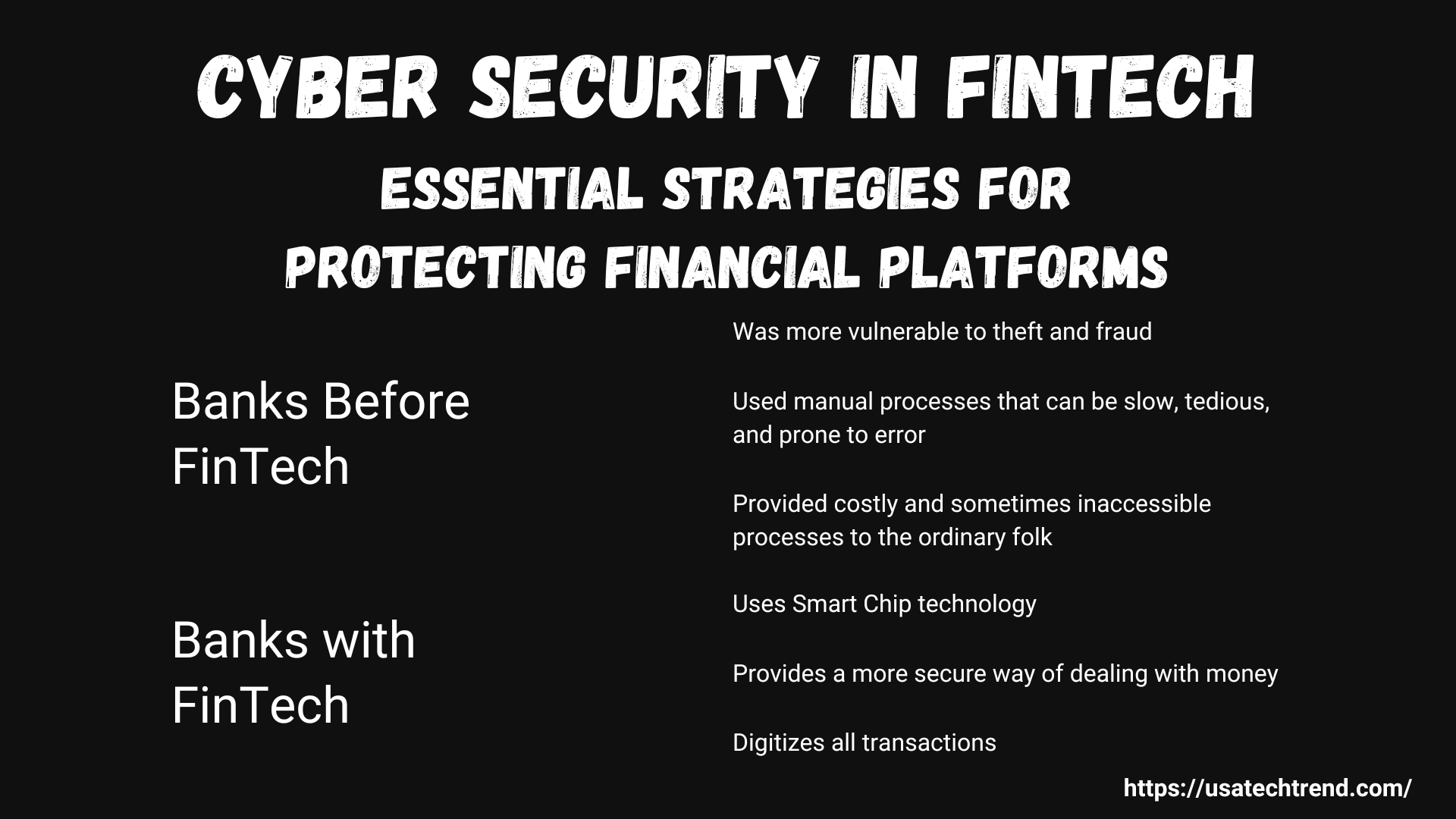
Cyber Security in Fintech is the practice of applying robust cybersecurity measures to financial technology platforms, ensuring sensitive financial data, customer trust, and regulatory compliance remain intact. This article explains what it is, why it matters, the key features and services, and practical steps fintech firms must take to reduce security risks.
Designed for beginners and professionals alike, this guide covers fintech cybersecurity risks, security posture improvement, and the tools and standards that make fintech platforms resilient to cyberattacks.
Why cybersecurity in fintech matters: Risks in fintech and security posture
Fintech companies handle high-value personal and financial data, making them prime targets for cybercriminals. A single security breach can cause reputational damage, regulatory penalties like GDPR violations, and costly remediation efforts.
Understanding the attack surface across fintech systems, APIs, and third-party integrations is essential to building a strong cybersecurity posture.
What cyber security in fintech is
Fintech cybersecurity is the combination of policies, technologies, and practices designed to protect fintech platforms, payments, and customer data from cyber threats. It encompasses encryption, authentication, access controls, and continuous monitoring.
Key elements include PCI DSS compliance for payment systems, GDPR-aligned data protection, and regular security audits and penetration testing to find security vulnerabilities before hackers do.
Why fintech security matters for financial services and customers
Sensitive financial data drives business value and customer trust. Data breaches and ransomware attacks can disrupt operations and lead to financial loss. Robust cybersecurity keeps fintech platforms running, safeguards customer data, and preserves trust in financial technology.
Key features/services of fintech cybersecurity and security tools
Fintech security combines multiple tools and services to protect systems. These cover prevention, detection, and response across the entire fintech stack.
Identity and authentication
Multi-factor authentication (MFA), strong credential policies, and continuous verification reduce the risk of unauthorized access. Authentication frameworks also include adaptive authentication for suspicious activity.
Encryption and data protection
End-to-end encryption for data in transit and at rest is vital. Tokenization and secure key management minimize exposure of sensitive financial data and help meet PCI DSS requirements.
API security and integration controls
Fintech APIs are a common attack vector. API security tools, rate limiting, strong authentication, and secure integration with third-party providers protect the supply chain and reduce security gaps.
Monitoring, detection, and response
Continuous monitoring, SIEM (security information and event management), and EDR (endpoint detection and response) identify anomalies and suspicious activity rapidly. Incident response plays a critical role in minimizing impact of a security breach.
Testing and audits
Regular penetration testing, red team exercises, and compliance audits help identify vulnerability and validate security controls. Audits support regulatory reporting and strengthen security posture.
Benefits of strong fintech cybersecurity
- Protects sensitive financial data and customer data from theft and fraud
- Maintains customer trust and brand reputation
- Ensures regulatory compliance (PCI DSS, GDPR, and sector-specific rules)
- Reduces financial losses from data breaches, ransomware, and fraud
- Improves operational resilience and business continuity
Comparison of fintech cyber security solutions: Security tools and measures
| Feature | Managed Security Service | In-house Security Team | Security Platform/Tool |
|---|---|---|---|
| Cost | Predictable subscription | High fixed salary and overhead | License or SaaS fees |
| Expertise | Broad security specialists | Deep product knowledge | Focused functionality |
| Scalability | High | Limited by hiring | Scales with usage |
| Responsiveness | 24/7 monitoring often included | Varies | Depends on vendor SLAs |
| Control | Lower | High | Medium |
Expert insight on fintech cybersecurity threats and security posture
Security experts advise a layered defense: combine preventive controls like MFA and encryption with detection capabilities and rapid incident response. Regular threat modeling, supply chain risk assessment, and continuous security testing are essential.
Leading security teams focus on reducing attack surface, securing fintech APIs, and integrating security into the product development lifecycle (DevSecOps).
Use cases: Fintech cybersecurity examples in the fintech industry
Mobile payments platforms
Mobile wallets use tokenization, biometric authentication, and secure enclaves to protect payment credentials and prevent fraud.
Digital banking and neo-banks
Digital banks deploy strong authentication, transaction monitoring, and behavioral analytics to detect fraudulent activity and protect customer accounts.
Loan origination and underwriting
Fintech lending platforms secure sensitive applicant data, use secure APIs with credit bureaus, and run anti-fraud checks through integrated third-party services.
Trading and investment apps
High-frequency trading and retail investment platforms emphasize encryption, secure order transmission, and rigorous access controls to protect assets and personal information.
Pricing and cost overview for fintech cyber security
Costs vary by size, risk profile, and coverage. Small fintech startups may spend modestly on SaaS security tools and basic audits, while established fintech firms allocate larger budgets to in-house security, managed services, and continuous testing.
Typical cost components:
- Security software subscriptions (SIEM, EDR, API security)
- Compliance and audit fees (PCI DSS, GDPR assessments)
- Penetration testing and red team exercises
- Staffing for security experts and incident response
- Insurance and legal costs after an incident
Budget guidance: allocate 6–15% of IT spend to security depending on risk and regulatory exposure. Early investment reduces long-term costs from breaches and fines.
Common mistakes fintech organizations make with security in fintech
Ignoring third-party risk
Many breaches stem from insecure integrations. Conduct vendor security reviews and require security attestations from third-party providers.
Underestimating API and supply chain vulnerabilities
APIs expand functionality but increase the attack surface. Enforce strong API security and continuous monitoring.
Poor authentication and credential management
Weak passwords and missing multi-factor authentication lead to account takeover. Implement MFA and rotate credentials regularly.
Skipping regular testing and audits
Security flaws persist without regular penetration testing and compliance audits. Schedule periodic security assessments and remediation plans.
Lack of security awareness training
Phishing remains a top vector for breaches. Invest in security awareness training and simulated phishing to reduce human risk.
Fintech cybersecurity future trends (2026): Cybersecurity threats and fintech cyber security
By 2026, fintech cybersecurity will evolve in response to increasingly sophisticated cyber threats and regulatory pressure. Expect stronger emphasis on cryptographic advances, AI-driven threat detection, and tighter API security standards.
Trends to watch:
- AI and ML for proactive threat hunting and anomaly detection
- Zero trust architectures across fintech platforms
- Stronger supply chain and third-party security regulations
- Wider adoption of hardware-backed keys and post-quantum crypto preparedness
- Increased regulation and standardized security frameworks for fintech APIs
Security best practices for fintech companies and fintech platforms
Adopt a risk-based security strategy
Prioritize assets and risks, focusing protection on systems that handle the most sensitive financial data and value.
Implement defense-in-depth
Layer controls: network segmentation, encryption, MFA, endpoint protection, and secure coding practices reduce the chance of a successful breach.
Regular assessments and continuous monitoring
Penetration testing, vulnerability scanning, and real-time monitoring reveal security flaws before attackers exploit them.
Integrate security into development
Apply DevSecOps practices—automated security testing in CI/CD pipelines and security code reviews—to reduce vulnerabilities in fintech applications.
Common regulatory and compliance considerations: PCI DSS, GDPR, and security regulations
Fintech firms must adhere to PCI DSS for payment data, GDPR for personal data in the EU, and local financial regulations. Maintain documentation, conduct regular audits, and keep transparent data protection practices to avoid penalties.
Expert checklist: Immediate actions fintech firms must take
- Enable multi-factor authentication for all user and admin access
- Encrypt sensitive data in transit and at rest
- Run regular penetration testing and vulnerability scans
- Secure and audit third-party integrations and APIs
- Implement continuous monitoring and incident response plans
Useful resources and internal links
Explore related topics and deeper guides: Fintech Investment Bank: Complete Guide to Modern Financial Advisory Services , Fintech Executive Search: Complete Guide to Finding Senior Fintech Talent , Fintech Executive Recruitment: How to Hire Top Financial Technology Leaders
Conclusion: security in fintech matters — build robust cybersecurity
Cyber Security in Fintech is no longer optional; it is foundational to sustainable growth for fintech companies. By combining strong authentication, encryption, API security, continuous testing, and a proactive security posture, fintech organizations can protect sensitive financial data and maintain customer trust.
Start with a realistic security roadmap and prioritize actions that reduce your highest risks. Engage security experts, run audits, and make security a product feature, not an afterthought.
Ready to strengthen your fintech cybersecurity posture? Contact our security team to schedule a vulnerability assessment and roadmap for robust protection.
FAQs about cyber security in fintech
1. What is the importance of cybersecurity in fintech?
Cybersecurity protects customer data, reduces fraud and financial loss, ensures business continuity, and supports compliance with regulations like PCI DSS and GDPR. It preserves customer trust, a critical asset for fintech firms.
2. How do fintech companies secure APIs and integrations?
They use strong authentication, OAuth, rate limiting, input validation, encryption, and API gateways. Regular security testing and vendor risk assessments are also essential to secure integrations.
3. What are common cyber security risks in fintech?
Risks include phishing, credential theft, API vulnerabilities, supply chain attacks, ransomware, and misconfigured cloud services. Regular audits and security best practices mitigate these risks.
4. How much should a fintech spend on cybersecurity?
Budgets vary, but many firms allocate 6–15% of IT spend to security depending on the risk profile and regulatory exposure. Prioritize key controls that reduce the most costly risks first.
5. What future trends will affect fintech cybersecurity in 2026?
Expect wider adoption of AI-driven threat detection, zero trust architectures, stronger supply chain controls, post-quantum crypto readiness, and standardized fintech API security frameworks.
Leave a Reply