
Handling money in apps is risky and complex, but the right transaction API can make payments fast, secure, and reliable. This guide shows you the best transaction API for fintech apps 2025, so you can pick a provider that scales with your product and keeps users confident.
What is the best transaction API for fintech apps 2025?
A transaction API is a developer interface that lets your app create, manage, and reconcile transfers, payments, refunds, and payout flows. In 2025 the best transaction APIs combine modern security, real-time settlement, and programmability for complex fintech use cases.
What it is
A transaction API abstracts banking rails, card networks, and ledger systems into simple calls your engineers use. It handles KYC, compliance, encryption, and event webhooks so you can focus on product features.
Why it matters
Financial trust comes from accuracy and speed. A strong transaction API reduces fraud, speeds reconciliation, and lowers operational overhead. For fintech apps, this translates to better user experience and faster growth.
Main list: Top transaction APIs and companies
Below are leading providers that stand out in 2025 for reliability, feature set, and developer experience. Each serves different needs—choose based on scale, geography, and product complexity.
1. Stripe Treasury & Payments
Stripe remains a top choice for startups and scaleups. It offers payments, card issuing, payouts, and embedded treasury features with excellent docs and global reach.
2. Plaid + Payment Partners
Plaid focuses on account aggregation and verification. Combined with payments partners, it enables ACH debits, instant bank transfers, and balance checks for smooth transactions.
3. Adyen
Adyen excels for global merchants with multi-currency support, advanced fraud tools, and unified reporting. It’s strong for embedded finance in apps with heavy transaction volumes.
4. Galileo / Synapse (Banking-as-a-Service)
Galileo and Synapse offer full-stack banking APIs for cards, accounts, and compliance. They’re suited to fintechs building banking products or marketplace payouts at scale.
5. Wise Platform
Wise is specialized in cross-border transfers and multi-currency accounts, ideal for fintechs with international users or payroll features.
6. Modulr
Modulr focuses on programmatic payments and account infrastructure in the UK/EU, providing real-time rails and automated reconciliation.
7. Checkout.com
Checkout.com provides a flexible payments API, strong fraud prevention, and local acquiring in many regions—good for consumer-facing fintech apps.
8. Finicity / Tink
These providers enable account verification and transaction intelligence. They often pair with payment processors to enable instant payouts and smarter underwriting.
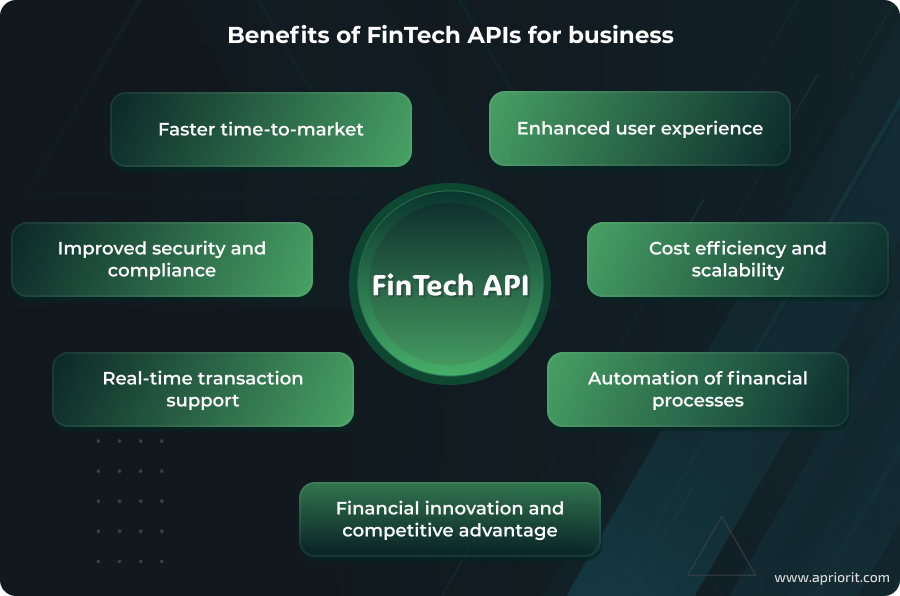
Benefits of using a top transaction API
- Speed: instant or near-instant settlements improve user experience.
- Security: built-in encryption, tokenization, and fraud tools protect funds.
- Compliance: KYC/AML workflows reduce regulatory risk.
- Scalability: handled by provider, so you avoid building complex rails.
- Developer agility: clear SDKs and webhooks accelerate feature delivery.
- Cost efficiency: consolidated fees and automated reconciliation cut ops costs.
Comparison table
| Provider | Best for | Key features | Geography |
|---|---|---|---|
| Stripe | Startups → scaleups | Payments, Issuing, Treasury, Connect | Global |
| Adyen | High-volume merchants | Multi-currency acquiring, risk tools | Global |
| Galileo / Synapse | Embedded banking | Accounts, cards, compliance | US-focused |
| Wise Platform | Cross-border payments | Multi-currency wallets, transfers | Global |
| Modulr | UK/EU payouts | Real-time rails, APIs | UK/EU |
| Checkout.com | Consumer payments | Local acquiring, fraud prevention | Global |
How to choose the right API
Map your product needs: do you need card issuing, ACH, cross-border, or marketplace payouts? Check compliance support and whether the provider supports your target countries.
Evaluate developer experience: test SDKs, API docs, and sandbox end-to-end flows before committing. Consider total cost including fees for refunds and currency conversion.
Technical checklist
Look for webhook reliability, idempotency, granular logs, and reconciliation reports. Confirm SLAs and support tiers for incidents.
Expert insight
Senior fintech engineers and payments leads agree: the best transaction API balances control and convenience. You want a provider that handles complexity but lets you own customer experience.
For 2025, experts highlight two trends: programmability and observability. Programmable APIs (card issuing, virtual accounts) let teams build new revenue paths. Observability—fine-grained metrics and tracing—reduces disputes and reconciliation time.
Real-world tip
Start with a primary provider for core flows and a secondary fallback for specific rails (e.g., use Wise for cross-border and Stripe for card rails). This hybrid approach reduces risk and optimizes costs.
Integration best practices
Design your payout and refund flows with retries, idempotency keys, and clear webhook handling. Automate reconciliation daily and surface exceptions to ops dashboards.
Invest in KYC automation early. A smooth verification flow reduces drop-off and speeds onboarding.
FAQs
1. What is the difference between a payments API and a transaction API?
Payments APIs focus on card and wallet payments. Transaction APIs often include broader banking features like accounts, transfers, and ledgering. Many providers now combine both.
2. Are transaction APIs secure for fintech apps?
Yes, reputable providers use tokenization, PCI/DSS compliance, strong encryption, and fraud detection. You still must implement secure handling and follow provider guidelines.
3. How much does a transaction API cost?
Costs vary: per-transaction fees, interchange, monthly platform fees, and currency conversion. Get total pricing for your projected volume and typical transaction value.
4. Can I switch providers later?
Switching is possible but can be complex. Design abstraction layers in your backend to decouple provider-specific code and make migration easier.
5. Which provider is best for cross-border transfers?
Wise Platform and Adyen are strong for cross-border use cases. Wise specializes in low-cost international transfers and multi-currency wallets.
Internal resources
For related topics and deeper strategy, see Best Fintech Software Development Companies (2026 Guide) , Best Fintech Tools for Ecommerce Startups Managing Cash Flow , Best Fintech Apps for Insurance Planning & Policy Tracking (2026) to plan your payments architecture and compliance workflows.
Conclusion
Choosing the best transaction API for fintech apps 2025 depends on your product goals: scale, geography, and feature needs. Use this guide to shortlist providers, run sandbox tests, and measure total cost and developer fit.
Ready to pick your API? Start by running a proof of concept with one provider and add a secondary rail for resilience. Move fast, test thoroughly, and prioritize security.
Call to action: Evaluate two providers in sandbox this week and map costs for your first 12 months to make a confident choice.
Leave a Reply