
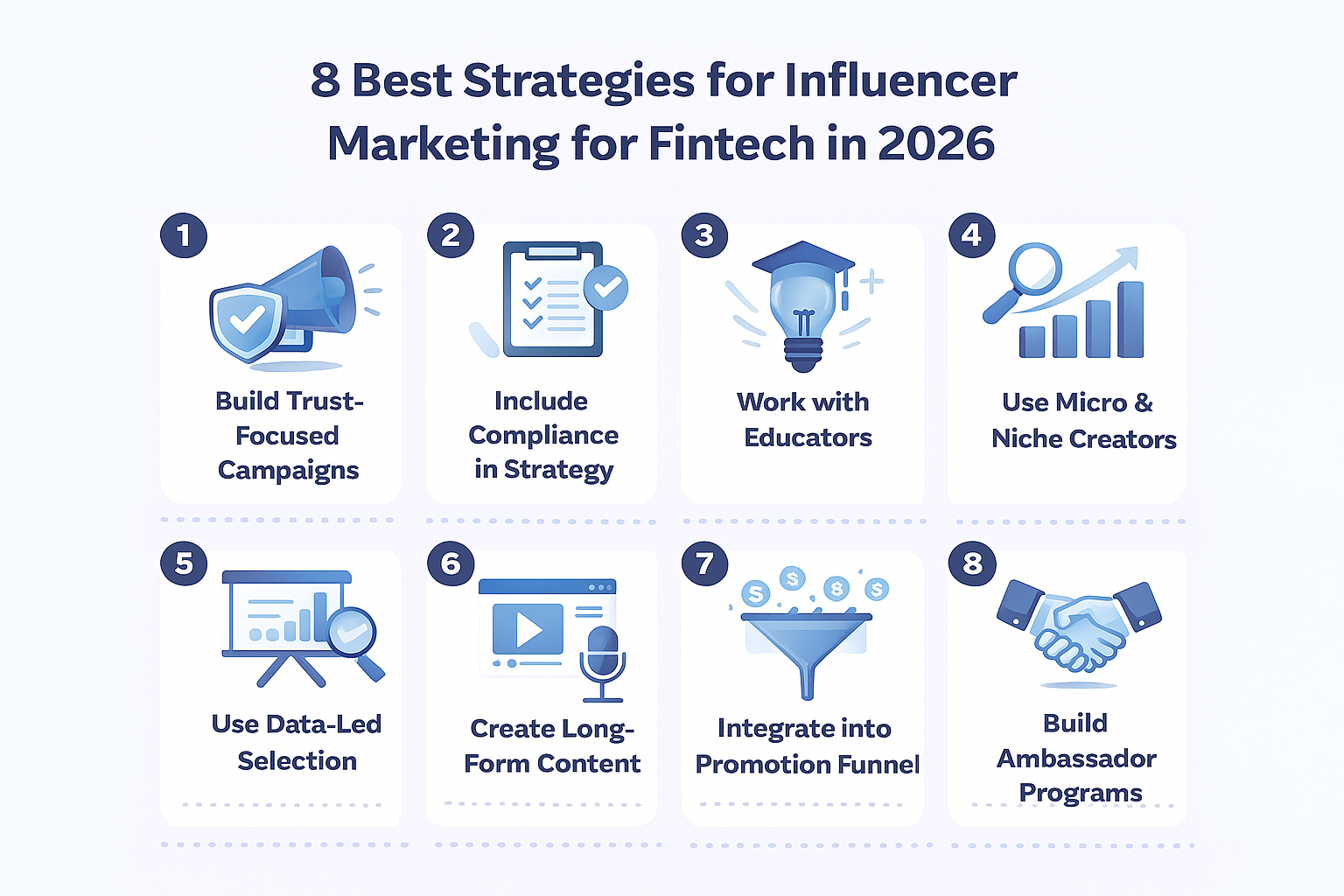
Your fintech product may solve real financial pain, but if the right customers never find you, growth stalls. Fintech inbound marketing can attract qualified leads, build trust, and speed growth without the high cost of cold outreach.
What fintech inbound marketing is and why it matters
Fintech inbound marketing uses content, SEO, email, and social media to draw potential customers to your fintech company. Instead of interrupting prospects with ads or cold calls, inbound strategies help people discover your product when they search for solutions.
This approach matters because financial decisions require trust and education. Inbound marketing lets fintech brands explain complex features, demonstrate security and compliance, and nurture leads over time.
Key fintech inbound marketing strategies for faster growth
Content marketing that answers real financial pain points
Create clear guides, calculators, and blog posts that solve customer questions. Topics could include “how to automate payroll for small businesses” or “what to look for in a crypto custody provider.”
SEO and organic discovery
Optimize pages for intent-based keywords like “best B2B payments platform” or “fintech onboarding best practices.” Technical SEO ensures pages load fast and are secure—both vital for financial services trust.
Email marketing and nurture sequences
Use targeted email drip campaigns to move leads through the funnel. Segment by company size, industry, or behavior to keep messages relevant.
Social media and community building
Share case studies, product updates, and educational threads on LinkedIn and Twitter. Build a community that trusts your brand for insights, not just sales pitches.
Webinars, demos, and interactive tools
Host webinars and offer interactive demos or ROI calculators. These tools convert curious visitors into qualified demo requests or trials.
PPC to support content discovery
Use targeted paid campaigns to amplify high-value content and capture search demand while your SEO matures.
Fintech inbound marketing tools and features to use
Combine these tools to run effective inbound campaigns:
- CMS with SEO features (to publish and optimize content)
- Marketing automation (for email flows and lead scoring)
- Analytics and attribution tools (to measure channels)
- Webinar and meeting platforms (for demos and events)
- Content tools (visuals, calculators, and case study templates)
- Customer data platform or CRM (to centralize leads and activity)
Benefits of fintech inbound marketing
- Lower customer acquisition cost over time
- Higher-quality leads who self-select by intent
- Stronger brand trust and authority in financial niches
- Scalable content assets that compound traffic
- Better alignment between product education and sales conversations
Comparison: Inbound vs Outbound for fintech
| Aspect | Inbound Marketing | Outbound Marketing |
|---|---|---|
| Cost over time | Lower as content compounds | Higher ongoing spend (ads, cold outreach) |
| Lead quality | Higher intent leads | Often lower, requires qualification |
| Trust building | Strong through education | Weaker, interruption-based |
| Scalability | High (content assets grow) | Limited by budget and reps |
| Speed | Slower initial ramp, long-term gains | Faster early response, short-lived |
Expert insight: How to prioritize inbound efforts for fintech startups
Focus on a narrow audience and a few high-impact content pieces. Startups should map the customer journey: awareness content for pain points, comparison content for evaluations, and technical docs for adoption. Track lead sources and conversion rates—double down on channels that show consistent qualified signups.
Security, compliance, and case studies should be emphasized early. These elements reduce negotiation friction and speed enterprise sales cycles.
Use cases: How fintech companies apply inbound marketing
B2B payments platform
Creates blog posts and calculators showing cost savings for finance teams. Offers webinars for AP automation and captures demo requests.
Personal finance app (B2C)
Publishes how-to guides and budgeting templates. Uses push notifications and email onboarding to reduce churn.
Neobanking for SMBs
Builds content for business formation, tax timing, and cash flow management. Uses SEO to rank for small business banking queries.
Wealthtech or robo-advisor
Shares transparent performance reports, educational videos about risk, and in-depth guides on fees and tax-loss harvesting.
Each use case benefits from tailored content, clear security messaging, and measurable nurturing tactics.
Frequently asked questions about fintech inbound marketing
1. How long before inbound marketing shows results?
Expect early results in 3–6 months for targeted campaigns; SEO-driven growth often takes 6–12 months. Paid channels can accelerate initial traffic.
2. What content works best for fintech audiences?
Educational guides, case studies, ROI calculators, security and compliance pages, and step-by-step onboarding content perform well.
3. Should fintech startups focus on inbound or outbound first?
Balance both. Use outbound to generate early customers and inbound to build sustainable, lower-cost growth. Prioritize content that supports sales conversations.
4. How do we measure inbound marketing success?
Track metrics like organic traffic, qualified leads, demo requests, MQL-to-SQL conversion, CAC, and LTV to CAC ratio. Use attribution to credit content that drives pipeline.
5. How do we handle regulatory and compliance content in marketing?
Work with legal to create clear, accurate content. Publish compliance summaries, security certifications, and privacy policies to build trust without overpromising.
Practical checklist to start inbound fintech growth
- Define target segments and top pain points
- Create a content calendar focused on intent-based topics
- Build lead magnets (guides, calculators, webinars)
- Set up marketing automation and lead scoring
- Optimize pages for SEO and site performance
- Measure results and iterate monthly
Fintech Email Marketing Strategies That Increase Conversions , Top Fintech Content Marketing Agencies Using AI-Driven Campaigns , Best Fintech App Development Services for Multi-Currency Cross-Border Payments
Conclusion — Start your fintech inbound marketing plan today
Inbound marketing for fintech is a sustainable way to attract high-quality leads, build trust, and reduce acquisition costs over time. Begin with a narrow audience, produce helpful content, and measure what moves the pipeline. With consistency, your content becomes a prime source of demos and customers.
Ready to grow faster with inbound strategies designed for fintech businesses? Schedule a content audit or start a 90-day plan to test SEO, email, and webinars.
Call to action: Contact our team to build a tailored fintech inbound marketing roadmap and capture more leads today.
Leave a Reply