
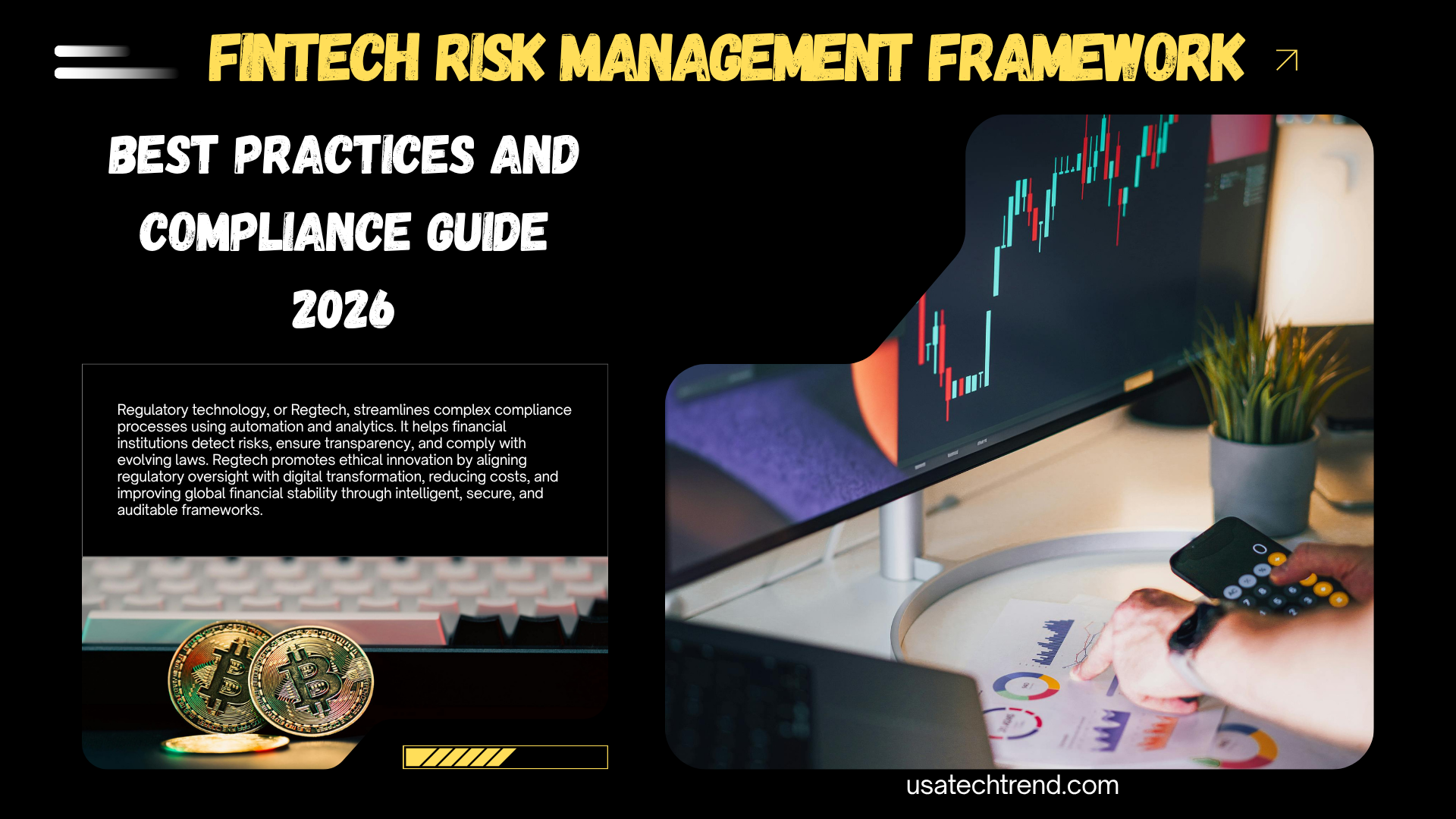
Fintech Risk Management Framework begins with a structured approach to identify, assess, and mitigate risks specific to financial technology companies. This guide explains what it is, why it matters, key features and services, benefits, and practical steps to implement an effective fintech risk management framework for startups, scale-ups, and established fintechs.
Why a fintech risk management framework matters: Risk landscape and risk assessment
Fintechs operate at the intersection of finance, software, and data. The risk landscape includes cybersecurity threats, fraud, regulatory non-compliance, operational outages, third-party failures, and market volatility. A formal risk assessment informs decisions, aligns stakeholders, and demonstrates governance to regulators and partners.
What it is: Core definition of a fintech risk management framework
A fintech risk management framework is a documented set of policies, processes, tools, and roles designed to manage risks across the organization. It covers identification, measurement, mitigation, monitoring, and reporting, tailored for fintech-specific exposures like payment rails, APIs, and data privacy.
Why it matters: Regulatory expectations and business resilience
Regulators expect robust frameworks that show accountability and control. Beyond compliance, effective risk management protects customer funds and data, reduces service outages, and preserves reputation—critical for growth and investor confidence.
Key features and services in a risk management framework for fintechs
Core features focus on practical controls and continuous improvement. Services can be internal or outsourced depending on scale and complexity.
Governance and policy: Roles, reporting, and board oversight
Clear governance assigns risk ownership, escalation paths, and reporting cadences. Boards should see aggregated risk dashboards and scenario analysis to make strategic decisions.
Risk assessment and scoring: Quantifying types of risks
Use qualitative and quantitative scoring to rank risks by likelihood and impact. This enables prioritization and resource allocation across cybersecurity, fraud, liquidity, credit, and third-party risk management.
Cybersecurity and incident response: Protecting systems and data
Cybersecurity services include threat detection, vulnerability management, penetration testing, and a documented incident response plan to limit damage during breaches or outages.
Third-party risk management: Supplier due diligence and monitoring
Third-party contracts should include SLAs, data protection clauses, and ongoing monitoring. Assess critical vendors for concentration risk and contingency planning.
Operational resilience and outage planning
Design for redundancy, failover, and disaster recovery. Regularly test recovery plans to minimize downtime and customer impact during outages.
Compliance and regulatory services
Automated compliance checks, policy libraries, and audit trails support AML/KYC, data privacy, and payment regulations across jurisdictions.
Benefits of implementing an effective fintech risk management framework
- Improved regulatory compliance and fewer enforcement actions
- Reduced incidence and impact of cyber incidents and fraud
- Greater operational resilience and fewer service outages
- Higher customer trust and brand protection
- Better capital allocation through prioritized risk remediation
- Smoother third-party integration and partner confidence
How benefits show up in metrics
Track key risk indicators (KRIs) like mean time to detect/respond, number of critical vulnerabilities, transaction fraud rate, and uptime percentage to measure framework effectiveness.
Comparison: Frameworks, tools, and service providers
Choosing the right combination depends on size, product complexity, and regulatory footprint. Below is a concise comparison to guide selection.
| Aspect | In-house | Managed Service | Hybrid |
|---|---|---|---|
| Cost | High initial, lower marginal | Predictable subscription | Balanced |
| Control | Maximum | Less direct | Moderate |
| Speed to deploy | Slow | Fast | Moderate |
| Expertise required | In-house hires | Provider expertise | Mixed |
| Scalability | Depends on investment | High | Flexible |
Expert insight: Building an effective fintech risk management framework
Senior practitioners emphasize three priorities: simplicity, measurability, and accountability. Start with risk heatmaps that the executive team understands, automate where repeatable, and maintain an up-to-date incident playbook.
Practical steps recommended by experts
1) Conduct a business-impact analysis for core services. 2) Map critical third parties and dependencies. 3) Implement continuous monitoring for anomalies. 4) Maintain regulatory change watch and align controls promptly.
Technology and data: AI and analytics in risk management
AI models can detect unusual transaction patterns, but they require high-quality labeled data and governance to prevent bias. Use analytics for early warning and scenario testing.
Use cases: Real-world applications of a fintech risk management framework
Payments startup preventing fraud
A payments fintech implemented real-time scoring, reducing chargeback rates by 40% and enabling safer scaling into new markets.
Neobank improving uptime and resilience
A neobank invested in multi-region failover and automated runbooks; measurable uptime improved and customer complaints decreased significantly during planned maintenance.
Lending platform managing credit and third-party risk
By integrating alternative data and third-party vendor scoring, a lending platform lowered default rates and reduced vendor-related service incidents.
Pricing and cost overview for a fintech risk management framework
Costs vary by approach and scale. Expect three main buckets: people, technology, and third-party services. SMEs can start with lean tools and managed services; large fintechs invest in bespoke platforms.
Typical cost ranges
Small fintechs: $50k–$250k/year (managed services + basic tools). Mid-market: $250k–$1M/year (hybrid model, more automation). Enterprise: $1M+/year (dedicated teams, advanced tooling, continuous testing).
How to budget wisely
Prioritize high-impact controls first (fraud prevention, critical vendor monitoring, incident response). Use phased rollouts and measure ROI via reduced losses and improved uptime.
Common mistakes when implementing a risk management framework
Ignoring third-party risk and concentration
Failing to map dependencies can leave a fintech vulnerable to supplier outages or cascading failures.
Overcomplicating controls
Excessive complexity leads to poor adoption. Keep policies actionable and measurable to ensure consistent execution.
Underinvesting in testing and exercises
Plans that are not tested fail under stress. Conduct regular tabletop and live drills to validate recovery times and decision-making.
Relying solely on point solutions
Disparate tools create blind spots. Aim for integrated dashboards and consistent data models for accurate risk assessment.
Future trends for fintech risk management in 2026
By 2026, expect more regulation around AI-driven decisions, higher standards for operational resilience, and mature third-party risk frameworks. Shared industry data pools will enable faster fraud detection, while cyber insurance markets tighten underwriting standards.
AI governance and explainability
Regulators will require explainability for automated credit and fraud models. Fintechs must document model training data, monitoring, and validation procedures.
Operational resilience and systemic risk
Clearer expectations for business continuity, including runbooks and cross-border coordination, will become standard. Industry-wide outage simulations will be more common.
Greater focus on third-party ecosystems
Firms will adopt continuous vendor scoring and contractual standards. The emphasis will shift from baseline checks to dynamic risk monitoring.
Conclusion: Adopting an effective fintech risk management framework
An effective fintech risk management framework protects customers, preserves reputation, and enables sustainable growth. Start simple, prioritize high-impact risks, automate monitoring, and keep governance aligned with strategy. Regular testing and expert oversight close the loop between policy and real-world resilience.
Ready to strengthen your risk posture? Engage internal stakeholders, map critical dependencies, and begin a phased implementation focused on measurable outcomes.
FAQs about Fintech Risk Management Framework
1. What is a fintech risk management framework?
A fintech risk management framework is a structured set of policies, processes, and tools to identify, assess, mitigate, and monitor risks specific to financial technology businesses, including cybersecurity, fraud, third-party, and operational risks.
2. Why is a fintech risk management framework important for startups?
Startups need a framework to demonstrate governance to partners and regulators, prevent costly incidents, and enable scalable growth by prioritizing controls where they matter most.
3. How do fintechs assess third-party risk?
Assessments include due diligence questionnaires, contract review, SLA definitions, continuous monitoring of vendor performance, and concentration analysis to identify single points of failure.
4. What common tools support a fintech risk management framework?
Tools include SIEM and EDR for security, fraud detection platforms, vendor risk platforms, GRC (governance, risk, compliance) suites, and analytics for KRI dashboards.
5. How should a fintech budget for a risk management framework?
Budget based on scale and regulatory exposure: prioritize high-impact areas first, consider managed services to reduce upfront cost, and allocate funds for continuous testing and automation.
Conclusion + Call to Action: Implementing a robust fintech risk management framework is essential to protect customers and enable growth. Start with a risk assessment, prioritize critical controls, and schedule a governance review this quarter to drive immediate improvements.
Fintech Recruitment London: Best Agencies and Hiring Trends for 2026 , Fintech Recruiter: How to Hire Top Fintech Talent Faster in 2026 , Fintech Executive Search Consultants: Top Firms Hiring Fintech Leaders in 2026
Leave a Reply