
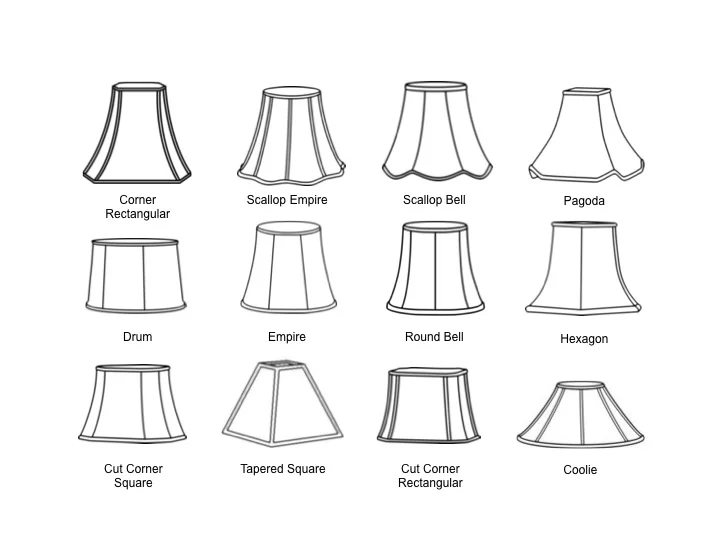
Understanding the correct lampshade fitter for your lamp is essential for both safety and aesthetics; this guide explains common type of fitter, how different lampshade fittings work with table lamp and floor lamp bases, and practical advice on adapting or replacing a lampshade fitter to achieve the perfect look and reliable performance.
What are the common types of lampshade fitter and shade fitter?
When considering lampshade fittings, it helps to visualise each type of fitter as a specific interface between the lampshade and the lamp base or lamp socket; common type choices include the spider fitter, uno fitter, clip-on fitter and euro fitter, and each type of lampshade fitter suits different types of lamp and light bulb arrangements. A spider fitter, typically found on many modern lampshades and chandeliers, uses a circular frame with spokes that sit on top of a harp or are fixed beneath a finial and is a common type for traditional table lamp and floor lamp setups where a harp saddle or finial secures the shade. An uno fitter fits directly onto the lamp’s threaded socket or onto an uno socket washer and is often used where the shade sits directly over the bulb, which may be desirable for smaller lamp bases, pendant fittings or heat-sensitive materials such as glass shade designs. Clip-on fittings clamp directly to the light bulb, making them a popular choice for small chandelier shades, candelabra style fittings and decorative clip-on shades that attach to certain lightbulb shapes like candle bulbs or small edison bulbs. Euro fitters, often referred to as European fitters, are similar to spider fitters in appearance but have a larger central hole to accommodate the lamp socket, washer and thread assembly under the finial, and they are frequently used on designer lampshades and on lamps and chandeliers with decorative finials and shade carriers. Beyond these, specialist shade carriers and chimney fitters exist for oil lamps, bridge lamps, and glass shade installations where a chimney or reflector dictates a specific type of fitting; understanding these options helps you choose the correct fitter for aesthetic harmony, safety, and compatibility with the lamp socket and bulb style.
Which lampshade fittings are most common for table lamp and floor lamp?
For table lamp and floor lamp applications, the most common lampshade fittings are the spider fitter paired with a harp and finial, and the uno fitter directly mounted to the lamp socket; spider lampshade fitters are widely used because they provide stability and allow the use of a decorative finial to secure the shade on top of a harp saddle, creating a classic silhouette that works well with both fabric and glass shades. Floor lamps often demand greater stability, so a harp and spider combination that sits above the lamp socket and is locked by a finial is typically preferred for taller floor lamp designs to prevent wobble and to keep the shade aligned with the bulb and reflector. For compact table lamps, an uno fitting that threads over the lamp’s socket or screws onto an uno socket washer provides a neat, low-profile solution that keeps the shade close to the bulb and is ideal for shades that are not intended to be raised by a harp. Clip-on fitters are less common on standard table or floor lamps but are sometimes used on small accent lamps or when retrofitting a lampshade to sit directly on a bulb without modifying the lamp base or socket. When selecting the right shade fitter for a lamp base, consider the lamp socket thread size, whether a harp saddle exists, the type of light bulb or lightbulb shape in use, and whether additional parts like adapters, washers or finials will be needed to achieve a safe and attractive fit.
What is the difference between a spider, harp, uno and clip-on fitting?
The difference between spider, harp, uno and clip-on fittings is primarily in where they attach and how they stabilize the lampshade: a spider fitter consists of a metal frame at the top of the shade with a central hole that sits on a harp saddle and is secured by a finial, providing a traditional method for attaching to table lamp and floor lamp harp assemblies; a harp refers to the U-shaped piece that mounts around the bulb and connects to the lamp base via a harp saddle or harp saddle screw, allowing the finial to screw down and lock the spider fitter in place. An uno fitter, conversely, is designed to slip over the lamp socket or onto a washer and thread assembly directly above the socket, meaning the shade is secured at the socket level rather than above it, which is ideal for lamps where a harp is not present or for pendants and ceiling pendant fixtures that require a compact profile. A clip-on fitter attaches directly to the bulb itself, usually by clipping onto the shoulder of a candle bulb or small globe; clip-on fitters eliminate the need for a harp or socket adapter but are only compatible with certain bulb shapes and are generally used on smaller shades or chandeliers. The choice between these type of fitting options depends on the lamp base design, whether a finial or washer is desired for decorative reasons, the type of bulb and whether adapters or additional parts are available to convert between uno fittings, spider fitters and euro fitters for flexible styling across different lamps and lampshades.
How do euro and spider lampshade fitters compare?
Euro fitters and spider fitters are comparable in that both provide a top-mounted attachment for lampshades, but they differ in centre hole sizing and compatibility with finials and socket assemblies: a spider fitter has radial spokes that meet at a central ferrule which typically sits on top of a harp and is secured by a finial, while a euro fitter generally features a larger central ring or hole designed to slip over the lamp socket or over an adapter and then be secured by a finial or washer beneath; euro fitters are common with European lampshades and allow for a low-profile look because they can be used with a shorter finial or a cap nut, making them favoured for modern lamps and pendant shades. In practical terms, a spider lampshade often requires a harp and is ideal for taller floor lamps and traditional table lamps, whereas a euro fitter is more versatile when retrofitting older lamp bases or when you want to use the lamp socket thread to secure the shade without a harp. Both types of fitter can work with a variety of light bulbs and lamp sockets, but the euro fitter’s design can simplify swapping finials and adapters, enabling you to use different finial styles or to convert the shade to an uno or clip-on arrangement via additional parts and adapters. Understanding these nuances helps you choose the correct fitter type for the lamp base, the type of lampshade (fabric, glass shade, reflector), and the intended bulb and wattage.
How does a spider fitter work on a lamp and when should I use a spider lampshade?
A spider fitter works by sitting at the top of the lampshade and resting on a harp saddle, where the fitter’s central hub aligns with the harp’s top opening and is held in place by tightening a finial; this assembly enables the shade to be consistently level and provides a stable platform that keeps the shade at the correct distance from the light bulb and lamp socket, crucial for heat dissipation and for ensuring the light bulb’s beam interacts properly with the shade’s reflector qualities. You should use a spider lampshade when your lamp already has a harp or when you want the traditional aesthetic of a finial-capped design that is common with table lamp and floor lamp styles, especially when using incandescent or halogen bulbs that produce more heat and therefore benefit from the distance the harp creates between the bulb and the shade. Spider lampshades are also excellent for larger shades and heavier materials such as glass shade or thick fabric, because the spider frame distributes weight evenly and reduces stress on the shade material and on the lamp’s top assembly. Additionally, spider fitters allow for easy removal and replacement via the finial, making them a practical choice for lamps and chandeliers that require periodic cleaning or bulb replacement, and they are compatible with a wide range of light bulb types provided you maintain the correct clearance from the bulb and observe wattage and safety guidelines for the lamp socket and shade material.
What is a spider fitter and where does it sit on the lampshade?
A spider fitter is a wire frame fixed to the top edge of a lampshade that converges into a central hub or ring where the fitter sits on a harp or is fastened by a finial; it occupies the uppermost portion of the shade, aligning the shade’s centre with the lamp’s socket axis and giving the lampshade a secure mount above the bulb and lamp base. The spider fitter is riveted or otherwise attached to the shade material or frame and is designed to hold the shade in a precise orientation relative to the lamp base, whether the lamp is a table lamp, floor lamp or ceiling pendant adapted to accept this fitter type. Because the spider sits at the top of the lampshade, it often allows for decorative finials and is suitable for shades that need ventilation around the bulb or that require the gap provided by a harp for heat control and light distribution; spider lampshade designs are common on lamps and chandeliers where shade carriers are used to suspend multiple shades from a central fixture.
Can a spider lampshade work with a harp or finial?
Yes, a spider lampshade is explicitly intended to work with a harp and finial assembly; the spider fitter’s central hub fits over the top of the harp and the finial screws down to lock the shade in place, creating a secure and decorative connection that is both practical for maintenance and attractive as a design feature. The finial not only secures the shade but also serves as a decorative accent that can be matched to the lamp base, whether that base is brass, porcelain, or a modern lamp base finish, and it can be swapped to change the look of the lamp without altering the shade or the harp. When selecting a finial, choose one that matches the washer and thread size of your lamp socket assembly to ensure a snug fit; the correct finial will ensure that the spider fitter remains stable, that the shade does not wobble, and that the gap between the bulb and the shade is maintained to meet safety and heat dissipation requirements.
Are spider lampshades compatible with all types of lamp bulbs and sockets?
Spider lampshades are compatible with most common types of lamp bulbs and sockets including incandescent, LED, and compact fluorescent types, so long as the shade provides adequate clearance for the bulb and the lamp socket supports a harp or an appropriate adapter; compatibility depends less on the spider fitter itself and more on the distance between the bulb filament and the shade material, the lamp socket type and whether the lamp’s heat output is within safe limits for the chosen shade material. For unusual or oversized bulbs such as large edison bulbs, reflector bulbs, or flame clip and candle bulbs used in chandeliers, you should verify that the harp height and spider fitter arrangement create enough space and ventilation, and consider alternative fitter types like uno or clip-on if the bulb shape makes spider mounting impractical. Always consult the lamp and lampshade manufacturer’s specifications for maximum recommended bulb wattage and to ensure the correct fitter type is used for safety and longevity of both the lamp and the shade.
What is an uno fitter and how do I fit an uno lampshade to a lamp?
An uno fitter is a type of lampshade fitting designed to attach directly to the lamp socket or to an uno socket washer, allowing the shade to be mounted close to the light bulb and often used on lamp types where a harp is not present; fitting an uno lampshade involves removing the bulb, sliding the uno fitter over the threaded portion of the socket or onto a washer, and then reinstalling the bulb so the shade sits snugly at the socket level. Many modern table lamps and pendants come with an uno socket or provide an uno adapter so that you can use a wide range of type of fitter designs without needing a harp; the uno fitter is particularly useful for glass shade designs or compact shades where a lower profile is desired and can work with a variety of light bulb shapes provided the shade affords adequate clearance and heat tolerance. When fitting an uno shade, ensure the thread and washer sizes match the lamp socket, check that the shade material is rated for the intended bulb wattage, and consider using adapters if your lamp has a different thread size or if you want to convert the shade to a spider or euro arrangement for decorative reasons.
How is an uno fitter different from an adapter or euro fitting?
An uno fitter differs from an adapter or euro fitting in that it is intended to directly engage the lamp socket or UNO thread at the socket level, whereas a euro fitting often uses a larger central hole to sit over the socket and be secured by a finial, and adapters provide a bridge between incompatible thread sizes or between spider, uno and euro styles; adapters can convert an uno socket to accept a spider or euro fitter or vice versa, enabling a lampshade with one fitter type to be used on a lamp with a different socket or harp arrangement. Uno fittings are generally simpler and lower profile than euro or spider systems, making them an ideal choice for lamps and chandeliers where space is limited or where the shade should hug the bulb and socket closely for stylistic reasons. Understanding these functional differences helps you choose whether to buy an uno fitter, a euro fitter, or an adapter as part of your lampshade fittings toolkit for maintaining or updating lamps and lampshades across your home.
Can I use an uno fitter on a lamp with a threaded socket or washer?
Yes, an uno fitter is designed specifically to be used on lamps with a threaded socket or washer, provided the thread size matches the uno fitting or an appropriate adapter is used; many lamp sockets have standard thread sizes that accept uno fittings directly, while others may require a small washer or thread adapter to secure the shade correctly. If your lamp socket has a different thread, you can buy uno fittings that include a range of washers and clamp rings to accommodate variations, and careful measurement of the lamp socket’s thread and the finial or adapter size will ensure the shade is mounted securely. When fitting, always power down the lamp and remove the bulb before attempting to attach an uno fitter, and verify that the assembled combination does not bring the shade too close to the bulb or exceed recommended wattage limits to avoid heat damage or fire risk.
When is an uno fitter the best choice for lamp shade fitters?
An uno fitter is the best choice when you need a low-profile, socket-level fit for compact lamps, pendant fixtures, or for shades that are intended to closely frame a bulb or reflect light in a specific way; uno fittings are also ideal when replacing shades on modern lamp bases that lack a harp or when working with glass shade designs and ceiling pendant installations where a spider or harp assembly would be impractical. Uno fittings are particularly useful for retrofit projects where you want to maintain the lamp’s original silhouette while changing the shade, and they pair well with LED and low-heat bulbs that reduce clearance concerns. If you value a neat aesthetic and straightforward installation without the additional hardware of a harp and finial, the uno fitter is often the correct fitter to achieve both form and function in a wide range of lamps and lampshades.
How do clip-on and harp fittings work and which should I choose for my lamp?
Clip-on fittings work by clamping directly to the bulb’s shoulder or to a small flange on the bulb, making them suitable for lightweight shades and for specific lightbulb shapes such as candle bulbs and certain small globes, while harp fittings consist of a metal U-shaped frame that mounts to the lamp base at the harp saddle and supports the shade via a spider fitter and finial; choosing between clip-on and harp depends on bulb shape, lamp height and the stability required. Clip-on fitters are convenient for converting chandeliers and small accent lamps where a harp cannot be fitted, but they are limited by compatibility with the bulb shape and by the risk of increased heat contact if used with high-wattage incandescent bulbs. Harp and finial assemblies provide superior stability and are typically safer for taller floor lamps and larger table lamps because they distribute the shade’s weight and keep it at a measured distance from the bulb, which is especially important when using reflector bulbs or incandescent bulbs with higher heat output. In practical terms, if your lamp is tall or the shade is large or heavy, choose a harp and spider assembly with a finial; if you are installing a small decorative shade on a chandelier or a compact lamp with candle bulbs, a clip-on fitter may be the correct and simplest solution.
What is a clip-on lampshade and which bulbs or bulbs shapes are compatible?
A clip-on lampshade has a small metal clip integrated into the fitter that grips the body of the light bulb, typically the shoulder of a candle bulb or small globe, thereby eliminating the need for a harp or socket adapter; compatible bulbs include small candelabra bulbs, certain torpedo or flame tip bulbs, and some compact globe shapes that provide a consistent surface for the clip to attach to securely. Clip-on fitters are commonly used on chandeliers, wall sconces and small table lamps where the shade is decorative and lightweight, but they are not suitable for larger bulbs or reflector shapes that do not offer a consistent grip point, nor are they advised for high-heat incandescent bulbs unless the shade material is rated to withstand the heat and the clip maintains a safe distance from the filament.
How does a harp and finial assembly install on a lamp?
Installing a harp and finial assembly involves positioning the harp saddle over the lamp socket or into the base’s designated harp slots, sliding the harp legs into the saddle so the U-shaped assembly rises above the socket, placing the spider fitter over the top so that its central hub aligns with the harp’s top, and finally screwing the finial into the harp’s threaded top to lock the shade in place; this method secures the shade above the bulb, offers excellent stability for larger lampshades and allows easy removal for bulb changes and cleaning. The correct harp height should be chosen so that the bulb does not touch the shade and to ensure even light distribution and safe operation with the chosen type of light bulb and lamp socket assembly.
Which fitter is safer or more stable for taller floor lamps?
For taller floor lamps, the harp and spider combination secured with a finial is generally the safest and most stable option because it raises the shade above the bulb, distributes weight evenly through the harp saddle and reduces wobble that can occur with low-profile uno or clip-on fitters; this fitter type also provides better ventilation around the bulb, which is important for higher-wattage incandescent or halogen bulbs, and allows a broader range of shade sizes and materials including heavier glass shades and fabric lampshades to be used without compromising stability. When safety and stability are priorities, particularly for floor lamps in high-traffic areas or in homes with children or pets, choose a sturdy harp, a correctly sized spider fitter and a secure finial to ensure the shade remains properly anchored and that the lamp socket assembly is not stressed by shade weight or movement.
What is a euro fitting and how do euro lampshade fittings differ from others?
A euro fitting is a lampshade fitter style characterised by a larger central opening or ring at the top of the shade which fits over the lamp socket or thread and is then secured by a finial or cap, offering a sleek, contemporary alternative to the spider-and-harp assembly and allowing the shade to be mounted at or near the lamp’s top without the need for a tall harp; euro fitters differ from uno and spider types by their compatibility with certain lamp socket thread arrangements and by their ability to be combined with a variety of finials and adapters to suit modern lamps, ceiling pendant fixtures and specific lampshade shapes such as drum shades or inverted glass shades. Euro fittings are popular in designer lamps and are frequently seen on lamps where the shade sits closer to the lamp base for a minimalist look, or on shades designed for ceiling pendant or chandelier installations where a neat, unobtrusive fit is required.
How does a euro fitter attach to the lamp socket or thread?
A euro fitter attaches by sliding the fitter’s central ring over the lamp socket or thread and then securing it with a finial, cap nut or washer that screws onto the lamp socket thread beneath the fitter, thereby locking the shade in place; this method can use the lamp’s existing thread or a supplied washer to ensure a snug fit, and it allows for adjustments in height by selecting different finials or adapters. Some euro fitters are designed to be used with an adapter that converts the socket thread to the euro standard, making them flexible for use on a wide variety of lamp designs including table lamp, floor lamp and ceiling pendant installations.
Can euro fittings be used with adapters or different finials?
Yes, euro fittings are often used with adapters and different finials to expand compatibility with various lamp sockets and to personalise the look of the lamp; adapters can convert between spider, uno and euro fitters, while different finial styles and sizes allow you to secure the shade with a decorative touch or to use a cap nut instead of a tall finial for a lower profile. When using adapters, ensure thread sizes match and that the assembled configuration maintains safe clearance between the bulb and the shade and that the washer and thread elements are tightened to avoid loosening over time.
Are euro lampshades common in specific types of lampshades or lamps?
Euro lampshades are common in modern and designer lampshades, drum shades, and in pendant and ceiling pendant installations where a neat, low-profile fit is desired; they are frequently used on contemporary table lamp and floor lamp designs, on lamps with decorative finials, and on shades made from heavier materials where a stronger, centrally secured attachment is preferred. Euro fittings also suit spaces where a minimal aesthetic is desired, and where the shade’s top needs to align closely with the lamp socket or decorative elements of the lamp base.
How can I adapt or replace lampshade fittings: adapters, finial, washer and thread tips?
Adapting or replacing lampshade fittings typically involves choosing the correct adapter to convert between spider, uno and euro fitters, selecting the correct finial and washer to match the lamp socket thread, and performing safety checks after installation; adapters are readily available to convert an uno socket to accept a spider or euro fitter, to step down or step up thread sizes, or to allow a clip-on shade to be used with a harp-equipped lamp. When replacing parts, measure the lamp socket thread and the fitter’s inner diameter carefully, select finials that match the thread and complement the lamp base and lampshade material, and use washers and clamp rings where necessary to ensure a snug fit that will not loosen with vibration or bulb changes. After replacement or adaptation, always inspect the assembly for wobble, verify that the shade does not contact the bulb, check that the lamp socket and wiring are intact, and power up the lamp briefly to feel for excessive heat or smell of burning that would indicate an unsafe clearance—these safety checks are essential whether you are updating a bedside table lamp, converting a chandelier, or fitting a glass shade to a floor lamp.
What adapters are available to convert between spider, uno and euro fitters?
Adapters are available in several configurations to convert between spider, uno and euro fitters: spider-to-uno adapters allow a shade with a spider fitter to be secured directly on a lamp socket, uno-to-spider adapters permit an uno shade to be mounted on a harp assembly, and euro adapters provide conversion to or from the larger central ring used in euro fitters. These adapters typically include washers, threaded collars and clamp rings to match the lamp socket thread and ensure secure seating; some are universal and come with multiple pieces to cover the most common thread sizes, while others are specific to certain lamp manufacturers or to specialist applications like glass shade or chimney fitters for oil lamps and bridge lamps.
How do I choose the correct finial, washer or thread size for a replacement?
Choosing the correct finial, washer or thread size starts with measuring the lamp socket thread diameter or checking the lamp manufacturer’s specifications, then matching the finial thread and washer size to the fitter and to the desired aesthetic; common sizes are readily available, but for unusual or antique lamps you may need to measure the lamp socket thread in millimetres and seek a compatible finial or washer. Consider the weight of the shade when selecting the finial and washer—heavier shades require a sturdier finial and a thicker washer to distribute load and avoid stress on the lamp socket, while lighter shades can use decorative finials that complement the lamp base finish. If in doubt, take the shade to a lighting specialist or bring the lamp base to a hardware store to ensure compatible thread and finial choices for safe long-term use.
What safety checks should I do after replacing or adapting a lampshade fitter?
After replacing or adapting a lampshade fitter, perform safety checks that include ensuring the shade is secure and does not wobble, verifying adequate clearance between the bulb and the shade to prevent heat build-up, confirming that the finial, washer and thread are tightened correctly and will not loosen with handling, testing the lamp with the recommended bulb wattage and with the type of light bulb intended for use, checking for any signs of scorching or heat damage after a short period of operation, and inspecting the lamp socket and wiring for any exposed or frayed connections; additionally, ensure clip-on fitters are only used with compatible lightbulb shapes and that chimney or glass shade fitters are stable and appropriately ventilated. These checks will help ensure your lamp and lampshade assembly is both attractive and safe for everyday use in your home or commercial setting.
Leave a Reply