
Problem: Fintech startups often lose deals because enterprise clients demand strong data security and controls. Benefit: SOC 2 compliance for fintech demonstrates that your company protects customer data, helping you win contracts and reduce risk.
What is SOC 2 compliance fintech and why it matters
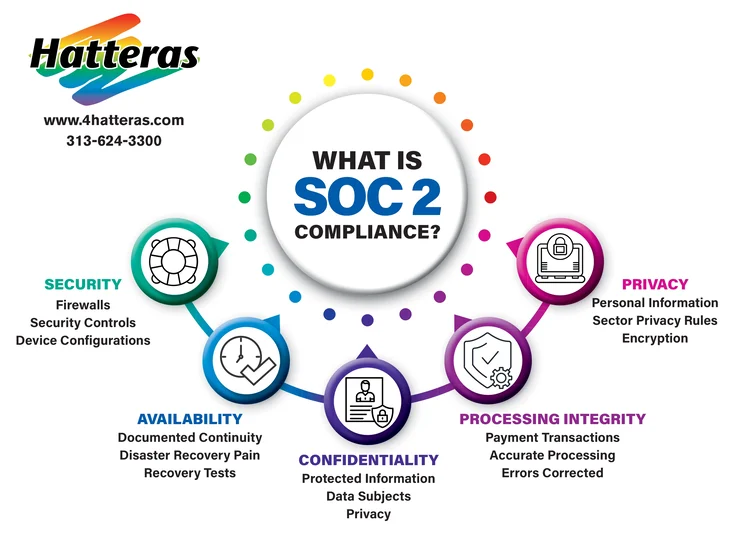
SOC 2 is an auditing framework developed by the AICPA that evaluates how service organizations handle data security, availability, processing integrity, confidentiality, and privacy. When we say “SOC 2 compliance fintech,” we mean applying SOC 2 controls and processes to fintech businesses—payments, lending platforms, wallets, and financial APIs—to prove they meet industry standards for protecting customer financial data.
Why it matters
Fintech companies handle sensitive financial and personal information. A SOC 2 report reassures partners, investors, and customers that you have meaningful controls in place. It also helps satisfy regulatory expectations and strengthens internal security and operational practices.
Core features, tools, and strategies for SOC 2 compliance in fintech
Achieving SOC 2 involves people, processes, and technology. Here are practical elements fintech teams should plan for.
Policies and governance
Create clear information security policies, access control rules, vendor management procedures, and incident response plans. Assign responsibility to an owner for each control.
Identity and access management (IAM)
Use role-based access controls, multi-factor authentication, and centralized identity providers (Okta, Auth0, Azure AD) to limit who can access production systems and customer data.
Encryption and data protection
Encrypt data at rest and in transit. Use cloud provider key management (AWS KMS, Google KMS) or hardware security modules for critical keys. Tokenize sensitive PII and PAN where possible.
Monitoring and logging
Collect logs from infrastructure, applications, and security tools. Use SIEM solutions (Splunk, Sumo Logic, Datadog) to detect anomalies and retain logs to meet audit requirements.
Change management and development controls
Implement version control, code reviews, automated testing, and CI/CD pipelines with gated deployments. Maintain separation between development, staging, and production environments.
Vendor and third-party risk
Inventory vendors, assess their security posture, and include security clauses in contracts. Require SOC 2 or equivalent evidence from critical vendors.
Tools that help
- GRC platforms (Vanta, Drata, Tugboat Logic)
- IAM providers (Okta, Auth0)
- Cloud security posture management (Prisma Cloud, Dome9)
- SIEM and logging (Datadog, Splunk)
- Secrets management (HashiCorp Vault, AWS Secrets Manager)
Benefits of SOC 2 compliance for fintech
- Builds customer trust and reduces sales friction
- Improves security posture and operational processes
- Makes vendor and partner onboarding easier
- Reduces risk of data breaches and related costs
- Helps with regulatory and investor expectations
Comparison: SOC 2 vs. PCI DSS vs. ISO 27001
| Criteria | SOC 2 | PCI DSS | ISO 27001 |
|---|---|---|---|
| Focus | Service controls (security, availability, confidentiality, processing integrity, privacy) | Payment card data protection | Information security management system (ISMS) |
| Scope | Customizable to services and trust principles | Specific to cardholder data environments | Organization-wide ISMS |
| Required for fintech? | Often yes for customers and partners | Required if you handle card data | Beneficial for mature security programs |
| Assessment type | Audit with report (Type I/II) | Compliance assessments and scans | Certification audit with continuous improvement |
Expert insight
“For fintechs, SOC 2 is less about checking boxes and more about building repeatable security and operational patterns that scale,” says a compliance lead with experience in banking integrations. “Start small: secure access, log everything, and automate evidence collection. That reduces audit headaches and shows real control maturity.”
Use cases for SOC 2 compliance in fintech
Merchant payments platform
Merchants and acquirers require proof of secure handling of transaction data before integrations and revenue-sharing agreements.
Lending marketplace
Loan originators and investors demand controls around borrower data and automated decisioning integrity.
Banking as a Service (BaaS)
BaaS providers need SOC 2 to reassure banks and partners that integrations and hosted services meet security expectations.
Payroll and payroll APIs
Customers expect payroll providers to protect salary information and tax IDs. SOC 2 helps demonstrate those controls.
Practical roadmap to get SOC 2 compliant
- Conduct a readiness assessment to identify gaps.
- Define scope (which services, systems, and trust principles apply).
- Implement controls: IAM, encryption, logging, vendor management, change control.
- Use an evidence automation tool to collect artifacts.
- Run a Type I audit (snapshot) or go straight to Type II (period-based) if ready.
- Remediate findings and continuously monitor.
FAQs
1. How long does SOC 2 compliance take for a fintech?
It depends on maturity. A focused company can prepare for a Type I audit in 3–6 months. Preparing for a Type II report typically takes 6–12 months to build and demonstrate controls over time.
2. Do all fintechs need SOC 2?
Not all, but many customers, partners, and investors expect it. If you handle sensitive financial or personal data or integrate with banks and enterprises, SOC 2 becomes important.
3. What is the difference between SOC 2 Type I and Type II?
Type I assesses the design of controls at a point in time. Type II evaluates both the design and operating effectiveness of those controls over a period (usually 3–12 months).
4. Can I use compliance automation platforms to help?
Yes. Platforms like Vanta, Drata, and Tugboat Logic automate evidence collection, gap tracking, and reporting—saving time and reducing human error.
5. Will SOC 2 prevent breaches completely?
No control framework guarantees zero breaches. SOC 2 reduces risk by ensuring consistent security practices, faster detection, and better incident response, which limits impact.
Conclusion
SOC 2 compliance for fintech is a practical investment in trust, risk reduction, and growth. It shows customers and partners you take security seriously while building repeatable processes that scale. Start with a readiness assessment, adopt core controls, and use automation to simplify audits. Ready to get started?
CTA: Schedule a readiness checklist and roadmap for your fintech: Best SOC 2 Audit Firms Specializing in Fintech , SOC 2 Audit Requirements for Fintech Companies Explained , Fintech Video Marketing Strategies That Drive Engagement
Leave a Reply