
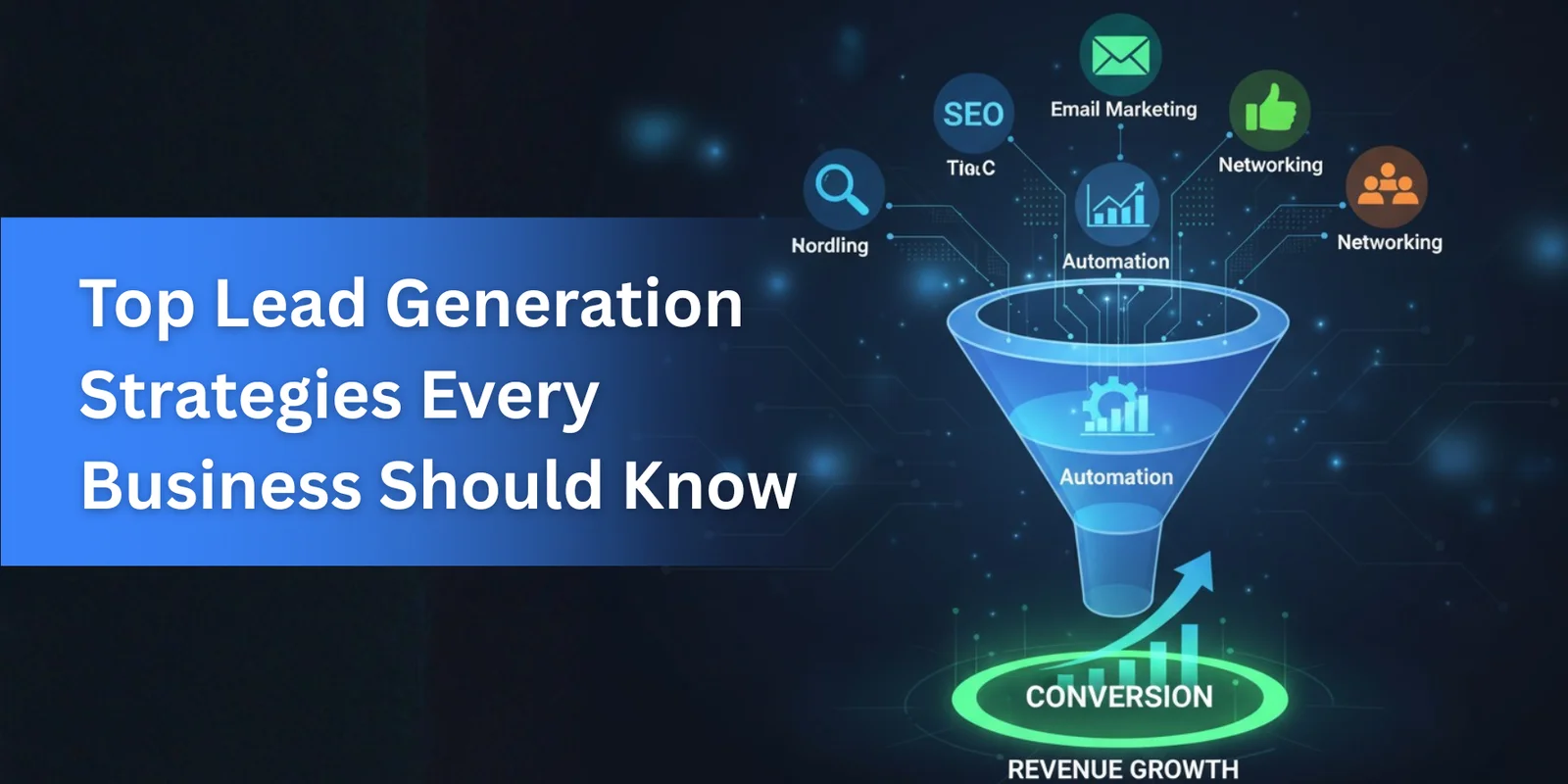
Struggling to find your first users or paying customers? The right lead generation strategies can turn that struggle into steady growth, helping fintech startups attract clients, investors, and long-term users faster and more predictably.
Introduction: What are lead generation strategies for fintech startups?
Lead generation strategies for fintech startups are the methods and channels you use to find, attract, and capture contact information from potential customers and partners. These strategies range from content marketing and referral programs to paid ads and partnerships. The goal is to build a pipeline of qualified leads that convert into trials, sign-ups, or sales.
Why lead generation matters for fintech startups
Fintech startups operate in a competitive, trust-driven market. Effective lead generation matters because it:
- Creates predictable customer inflow
- Helps validate product-market fit
- Reduces customer acquisition cost (CAC) over time
- Builds trust and authority in a regulated industry
Top lead generation strategies for fintech startups
Below are practical, beginner-friendly strategies you can start using today. These combine organic, paid, and partnership approaches to attract diverse lead sources.
1. Content marketing and SEO
Create helpful articles, guides, and tools that answer real customer questions—topics like “how to manage cash flow” or “secure payment integrations.” Optimize content for search and for intent-based keywords to attract organic traffic and capture leads via gated content or newsletters. This is a long-term channel that compounds.
2. Product-led growth (freemium, trials, tools)
Offer a free tier, trial, or a useful calculator that requires an email to access advanced features. Let the product demonstrate value quickly—this converts users into leads with intent to buy.
3. Partnerships and integrations
Partner with accounting software, banks, or payment processors. Co-marketing and integration listings expose your product to an existing customer base and often yield high-intent leads.
4. Paid acquisition (search, social, display)
Use targeted PPC campaigns on Google and LinkedIn to reach CFOs, operations managers, or small business owners. A/B test creatives and landing pages to lower CAC.
5. Webinars and educational events
Host webinars on compliance, product implementation, or industry trends. Webinars generate qualified leads and position your team as experts.
6. Referral and affiliate programs
Incentivize existing users and partners to refer other businesses. Referrals typically convert faster and cost less to acquire.
7. Community and developer outreach
Build a community on Slack, Discord, or forums for developers and finance professionals. Share SDKs, docs, and sample code to attract technical leads and integrate use cases.
Features, tools, and channels to support lead generation
Use a mix of tools to automate capture, nurture, and scoring:
- CMS and SEO: WordPress, Ghost, Ahrefs, SEMrush
- Marketing automation: HubSpot, Mailchimp, ActiveCampaign
- Analytics: Google Analytics, Mixpanel
- Ad platforms: Google Ads, LinkedIn Ads, Meta Ads
- Webinar & events: Zoom, Demio, Hopin
- CRM: Salesforce, Pipedrive, HubSpot CRM
- Referral & affiliate tools: ReferralCandy, PartnerStack
Benefits of using these lead generation strategies
- Higher-quality leads with clearer conversion intent
- Lower long-term customer acquisition cost
- Faster product validation and iteration
- Improved investor and partner visibility
- Stronger brand authority in a crowded market
Comparison: Which strategy fits your stage?
| Strategy | Best for | Time to results | Typical cost |
|---|---|---|---|
| Content & SEO | Early to growth | 3–12 months | Low–Medium |
| Product-led growth (free/trial) | Early product-market fit | Immediate–3 months | Low–Medium |
| Paid ads | Growth/scale | Immediate | Medium–High |
| Partnerships & integrations | All stages | 1–6 months | Low–Medium |
| Webinars & events | Trust-building, thought leadership | 1–3 months | Low–Medium |
Expert insight
From experience working with fintech founders: prioritize channels that match buyer intent. For B2B fintech selling to finance teams, combine thought leadership content with targeted LinkedIn campaigns and product trials. For consumer fintech, focus on app-store optimization, referral loops, and paid social. Always measure CAC, LTV, and conversion rate from each channel and double down where ROI is clear.
Use cases: How startups applied these tactics
Use case 1 — SMB payments startup
They built a free invoice generator (lead magnet) and gated advanced templates behind email capture. Combined with integrations listed in partner marketplaces, they reduced CAC by 40% in six months.
Use case 2 — Neobank focused on freelancers
They ran targeted ads focused on tax season, offered a 30-day premium trial, and used an in-app referral program. Trial-to-paid conversion increased from 3% to 9% after optimizing the onboarding flow.
Use case 3 — B2B treasury SaaS
They produced a monthly webinar series on risk management and used LinkedIn sponsored content to drive sign-ups. Webinars consistently provided high-quality leads for sales demos.
Practical growth plan (30/60/90 days)
0–30 days
- Set up CRM and tracking
- Create one pillar content piece and a lead magnet
- Launch a small paid test campaign
30–60 days
- Run webinars and collect feedback
- Set up referral program
- Start partnership outreach
60–90 days
- Scale winning paid campaigns
- Optimize onboarding for conversions
- Produce regular SEO content and track rankings
Frequently Asked Questions
1. How much should a fintech startup spend on lead generation?
There’s no one-size-fits-all. Early-stage startups often spend conservatively on paid ads and invest more in content, partnerships, and product-led growth. As you scale, allocate a percentage of projected revenue or target CAC. Track ROI closely.
2. Which channel gives the fastest results?
Paid search and social offer the fastest results but can be expensive. Product trials and partnerships also yield quick, high-intent leads if your product demonstrates value fast.
3. How do I measure lead quality?
Track lead-to-customer conversion rate, time to conversion, cost per lead (CPL), and later customer lifetime value (LTV). Use lead scoring in your CRM to prioritize sales follow-up.
4. Can content marketing work for regulated fintech products?
Yes. Focus on educational content, compliance guides, and case studies that build trust. Always review claims with legal/compliance to avoid issues.
5. What common mistakes should fintech startups avoid?
Avoid spreading thin across too many channels, neglecting analytics, and skipping regulatory checks. Also, don’t ignore onboarding — a great lead can be lost if the product experience is poor.
Conclusion
Lead generation strategies for fintech startups are a mix of product, marketing, and partnerships. Start simple: build a high-value lead magnet, test paid channels, and set up a reliable way to track and nurture leads. Over time, double down on channels with the best ROI.
Ready to grow your fintech startup? Start by picking one strategy from this list and run a 30-day test. Need help creating a growth plan? [link: related topic] or explore our resources for scaling fintechs now. Effective Fintech Sales Strategies for Startups and SaaS Companies , Best Fintech Marketing Campaigns to Drive Growth in 2026 , Fintech Inbound Marketing Strategies for Faster Growth
Leave a Reply