
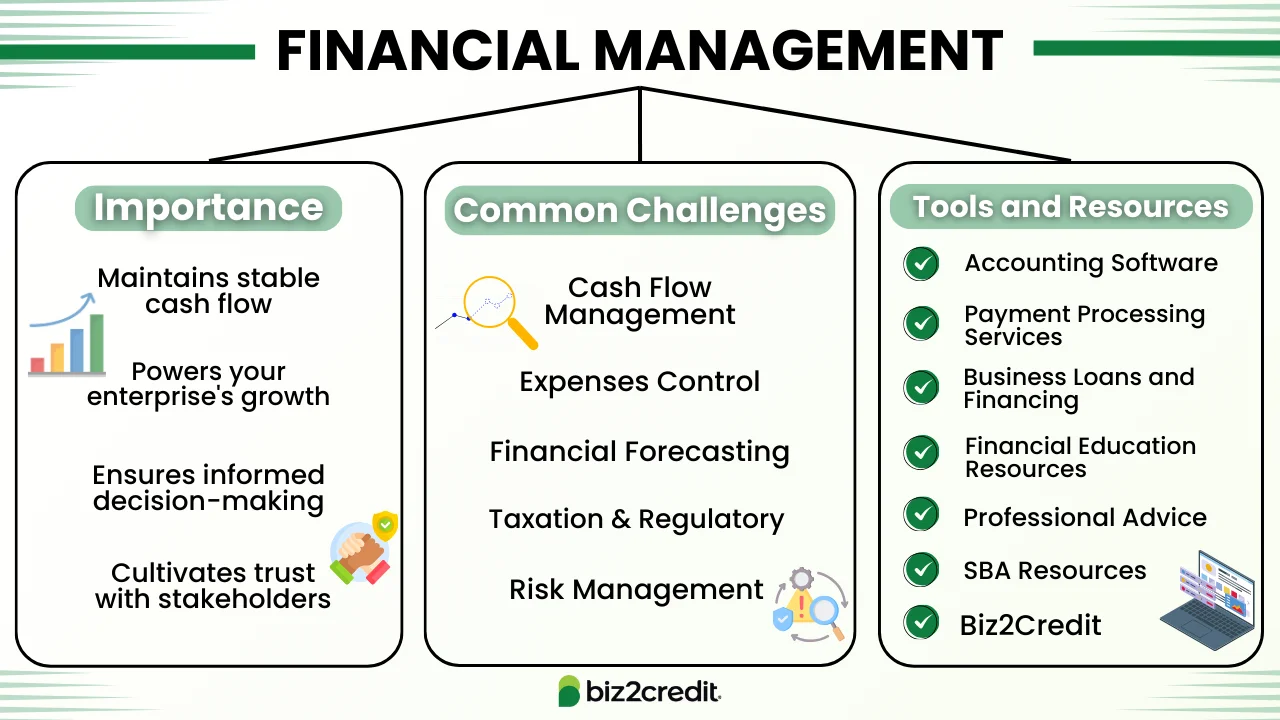
Running short of cash while sales climb is a common pain for small business owners. The right financial management strategies for small business fix cash flow leaks, reduce unnecessary costs, and set you up to grow with confidence.
Introduction: What good financial management does for you
Financial management means tracking money coming in and out, planning for taxes, and using data to make smarter decisions. When done well, it keeps payroll on time, avoids surprise bills, and lets you invest when opportunity knocks.
What it is
Financial management for a small business covers bookkeeping, budgeting, forecasting, cash flow management, and financial reporting. It includes short-term tasks like invoicing and long-term planning like capital allocation and risk management.
Key components
Bookkeeping and accounting to record transactions. Cash flow forecasting to predict shortages. Budgeting to control spending. Financial reporting to measure performance. Tax planning to minimize liabilities.
Why it matters
Without solid financial management you risk late payroll, missed opportunities, and shrinking margins. Good practices improve decision-making, help secure funding, and make growth sustainable.
Small businesses with clear financial systems are more likely to survive economic shocks and scale profitably.
Top financial management strategies for small business
1. Implement real-time bookkeeping
Accurate, up-to-date records let you spot trends and fix issues before they become crises. Automate bank feeds and reconcile weekly.
2. Build a rolling cash flow forecast
Forecast 13 weeks ahead and update weekly. This gives you time to adjust spending or arrange short-term financing.
3. Separate business and personal finances
Use a dedicated business account and card. It simplifies taxes and provides clearer financial visibility.
4. Set clear budgets and KPIs
Create monthly budgets by category and track KPIs like gross margin, burn rate, and customer acquisition cost.
5. Control costs with regular reviews
Audit recurring expenses every quarter. Negotiate supplier terms and drop underperforming subscriptions.
Best tools/software
Good software makes these strategies practical. Below are popular options with pros and cons to help you choose.
- QuickBooks Online – Pros: robust accounting features, widely used by accountants; Cons: can be complex for beginners, monthly fees for higher tiers.
- Xero – Pros: clean interface, strong bank reconciliation, unlimited users; Cons: fewer payroll integrations in some regions, add-ons for advanced features.
- Wave – Pros: free core accounting, simple for freelancers/small teams; Cons: limited advanced features, paid payroll and payments in some territories.
- FreshBooks – Pros: great invoicing, time tracking for service businesses; Cons: less strong for inventory or complex accounting.
- Float (cash flow forecasting) – Pros: excellent forecasting visuals, integrates with major accounting packages; Cons: extra subscription cost.
- Expensify – Pros: simplifies expense reporting and reimbursement; Cons: may be overpowered for micro-businesses.
Benefits
- Improved cash flow visibility and fewer surprises
- Lower operating costs through targeted reductions
- Stronger ability to secure loans or investor funding
- Faster, better-informed decisions
- Reduced tax risk and easier compliance
Comparison table
| Feature | QuickBooks | Xero | Wave | FreshBooks |
|---|---|---|---|---|
| Core accounting | Excellent | Excellent | Good | Good |
| Invoicing | Good | Good | Good | Excellent |
| Payroll | Available (paid) | Available (region-dependent) | Paid | Limited |
| Cash flow forecasting | Via add-ons | Via add-ons | Limited | Limited |
| Ease of use | Medium | Medium | High | High |
Pricing overview
Pricing changes often; below is a general snapshot to help planning. Check providers for current rates.
- QuickBooks Online: $15–$90/month depending on plan and features.
- Xero: $13–$70/month with payroll and add-ons extra.
- Wave: Free basic accounting; payroll and payments charged per use.
- FreshBooks: $15–$50/month with time tracking and invoicing tiers.
- Float: Typically $20–$40/user/month for cash flow forecasting tools.
Expert insight
Small-business CFOs say the most impactful change is discipline: daily or weekly financial check-ins. They recommend automating routine tasks and investing time in cash flow forecasting. Even a simple 13-week cash forecast often prevents costly surprises.
Another tip from experts: prioritize metrics that tie directly to cash — receivables days, payables days, and inventory turnover — and set tangible targets for each.
How to get started in 30 days
Week 1: Choose an accounting tool and connect bank feeds. Week 2: Clean up historical data and set up categories. Week 3: Build a basic cash flow forecast and a monthly budget. Week 4: Automate invoicing, set reconciliation routines, and review subscriptions.
Frequently Asked Questions
1. How often should I review my finances?
At minimum, review cash flow and bank reconciliations weekly and run a profit/loss review monthly. Weekly checks catch problems early.
2. Do I need an accountant if I use software?
Software handles transactions, but an accountant provides tax strategy, compliance checks, and strategic guidance. For growth-stage businesses, a part-time or fractional CFO can be valuable.
3. Which metric is most important for small businesses?
Cash flow is king. Track operating cash flow and a 13-week forecast. Profitability matters, but cash flow keeps the lights on.
4. How much should I budget for financial software?
Expect $15–$90/month for core accounting plus optional $20–$40/month for forecasting tools. Plan for initial setup or bookkeeping support if needed.
5. How can I improve cash flow quickly?
Invoice faster, offer early-payment discounts, tighten credit terms, negotiate supplier payment extensions, and pause nonessential spending.
Internal resources
For more on planning and forecasting, see our guide: 10 Best Finance Automation Tools for Small Business , Best Mobile Expense Reporting Tools for Businesses , Best Expense Tracking Software for Small Businesses
Conclusion
Adopting practical financial management strategies for small business transforms uncertainty into control. Start by choosing the right tools, building a simple cash forecast, and instituting weekly reviews.
Ready to stabilize cash flow and grow with confidence? Implement these steps this month and track the impact. If you want tailored help, contact a small-business advisor to set up your first forecast and budget.
Leave a Reply