
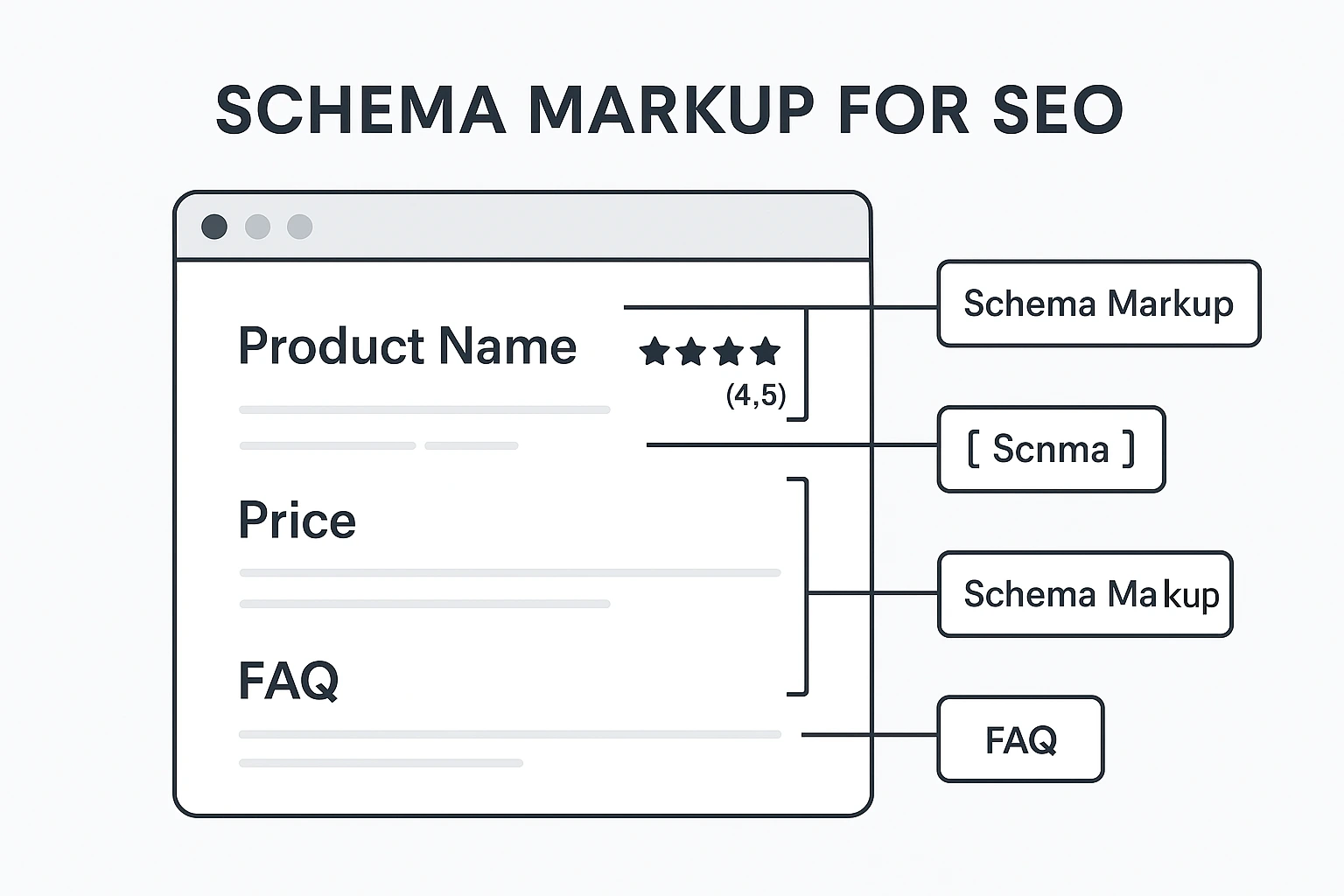
Many fintech websites miss clicks because search engines don’t fully understand their services. Implementing schema markup for fintech services fixes that and can deliver richer results, higher click-through rates, and clearer user signals.
This guide explains what schema markup for fintech services is, why it matters, how to implement it, and real use cases you can copy.
What is schema markup for fintech services and structured data for financial products?
Schema markup is a standardized way to describe content to search engines using schema.org vocabulary. For fintech, that means labeling bank accounts, loans, credit cards, exchange rates, fees, and reviews so search engines can show richer snippets and knowledge panels.
Structured data helps search engines understand your financial product details, which improves search visibility and can surface product-specific features directly in search results.
Why schema markup matters for financial institutions and fintech companies
Search engines reward clarity. Well-implemented structured data helps search engines parse important fields like interest rates, fees, currencies, and eligibility.
For fintech and bank or credit union sites, that means better presentation in search, higher trust, and potentially more organic traffic.
Key reasons it matters
- Improves search visibility and rich snippets in Google.
- Increases click-through rates via enhanced search results.
- Makes content machine-readable for voice and mobile search.
- Supports knowledge panels and localbusiness schema where relevant.
Features, tools, and strategies for implementing schema
Implementing markup for financial content requires choosing the right schema types and testing thoroughly.
Essential schema types for fintech
- FinancialProduct / FinancialProductSchema — for bank accounts, loans, credit cards.
- Organization — for the company details and brand markup.
- LocalBusiness — for branch locations and contact info (bank or credit union).
- Review / AggregateRating — to show product ratings.
- ExchangeRateSpecification — for forex and currency tools.
- FAQPage — for frequently asked questions on product pages.
Tools to implement and validate
- Google Search Console — monitor rich result status and errors.
- Rich Results Test — validate JSON-LD markup for supported rich results.
- Schema.org documentation — authoritative reference for types and properties.
- Tag managers or CMS plugins — for deploying JSON-LD without developer heavy lifting.
Implementation strategies
Start with high-traffic product pages, use JSON-LD, include only accurate properties, and keep values current (rates, fees). Coordinate with legal and product teams to avoid misrepresentation.
Benefits of schema markup for fintech services
- Enhanced search result appearance (rich snippets, price and rate displays).
- Higher organic click-through rates and traffic.
- Better visibility for specific financial product schema and review stars.
- Improved eligibility and product discovery for users.
- Increased trust via complete organization and review data.
Comparison: schema types for fintech (features vs suitability)
| Schema Type | Best For | Supports |
|---|---|---|
| FinancialProduct | Bank accounts, loans, credit cards | interestRate, fees, eligibilityCriteria, productType |
| ExchangeRateSpecification | Forex tools, currency converters | currencyFrom, currencyTo, currentExchangeRate |
| LocalBusiness | Branch locations, local services | address, openingHours, geo, telephone |
| Review / AggregateRating | Product and service reviews | ratingValue, reviewCount |
| FAQPage | Frequently asked questions pages | acceptedAnswer, suggestedQuestion |
Expert insight: practical tips from SEO for banks and fintech specialists
Experts recommend using JSON-LD for fintech schema because it’s easy to maintain and less likely to break. Focus on accuracy—misstating rates or fees can trigger policy issues.
Start with product pages that drive conversions. Use AggregateRating and Review markup only when reviews are genuine and visible to users. Track changes in Google Search Console and iterate based on performance data.
Use cases: real examples of financialproduct schema in action
Savings account page
Include FinancialProduct with APY, minimum balance, fees, and eligibility. Add organization and localbusiness for the branch network.
Loan product comparison
Use FinancialProduct to mark APR, term lengths, and fees. Add Review schema for customer feedback.
Currency conversion tool
Use ExchangeRateSpecification to expose live rates so search engines can pull accurate values for currency queries.
These use cases increase the chance that search engines will show your product details directly on the SERP.
Schema markup for fintech services: frequently asked questions
1. What is the best schema format to use?
JSON-LD is the preferred format. It’s recommended by Google and easier to maintain than microdata or RDFa.
2. Can I use schema for interest rates and fees?
Yes. Properties like interestRate, annualFee, and fee are supported on FinancialProduct if they are factual and up to date.
3. Will schema get me a rich snippet automatically?
No. Schema improves eligibility but does not guarantee rich snippets. Google decides when and how to display enhanced results.
4. How do I test and monitor my structured data?
Use Google’s Rich Results Test to validate markup and Google Search Console to monitor errors, warnings, and impressions for rich results.
5. Are there policy risks for financial sites?
Yes. Financial content is sensitive. Ensure claims are accurate, include necessary disclosures, and comply with local regulations and Google’s content policies.
Implementation checklist and best practices for schema type selection
- Choose FinancialProduct for accounts, loans, and cards.
- Use ExchangeRateSpecification for currency data.
- Prefer JSON-LD and place it in the head or body of the page.
- Keep rate and fee values current and visible to users.
- Test with Rich Results Test and track in Search Console.
Conclusion: start implementing structured data for improved search visibility
Schema markup for fintech services is a high-impact SEO strategy. It helps search engines understand your financial products, unlocks enhanced search results, and can increase click-through rates and conversions.
Begin with your most important financial product pages, use JSON-LD, validate, and monitor performance. If you need a checklist or implementation plan, start now and measure results within weeks.
Ready to improve visibility and appear in rich snippets? Audit a product page today and add FinancialProduct schema to see the difference.
Best SEO Agencies for Fintech Companies (2026 Guide) , Best Lead Generation Strategies for Fintech Startups , Effective Fintech Sales Strategies for Startups and SaaS Companies
Leave a Reply