
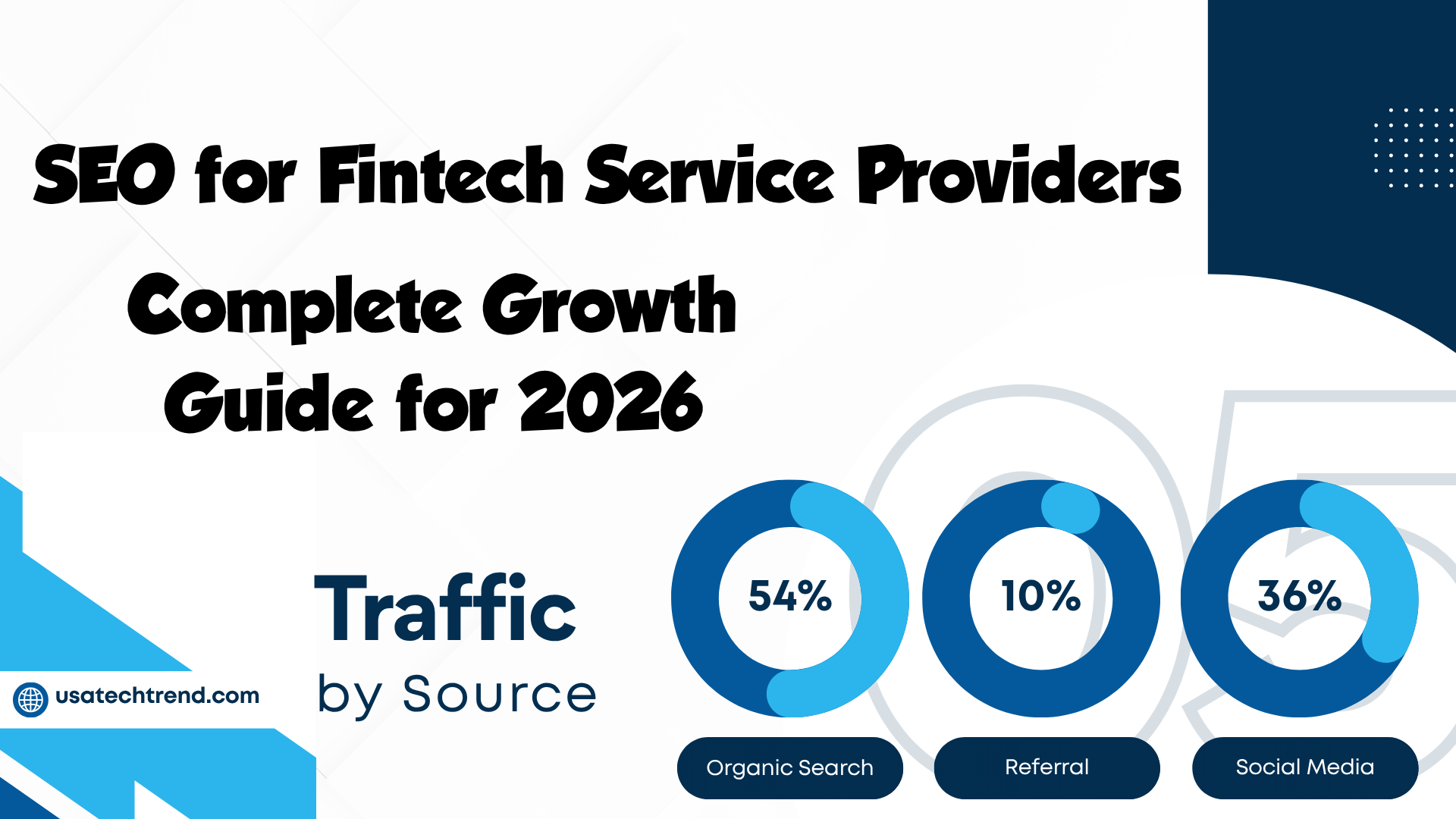
SEO for Fintech Service Providers is the strategic application of search engine optimization tailored to companies offering financial technology products and services. This guide explains what it is, why it matters, and how to build a measurable SEO program that drives qualified organic leads.
What is SEO for Fintech Service Providers?
Fintech SEO combines technical SEO, content strategy, and authority-building to help banks, payment processors, lending platforms, and B2B fintech vendors rank for high-intent queries. It addresses regulatory considerations, trust signals, and complex buyer journeys specific to financial services.
Core components: Technical SEO, content, and authority
Technical SEO ensures crawlability, site speed, and structured data for rich results. Content targets transactional and informational queries. Authority-building focuses on citations, partnerships, and trust signals that reinforce E-E-A-T (Experience, Expertise, Authoritativeness, Trustworthiness).
Related semantic keywords
Fintech SEO, search engine optimization for finance, financial services SEO, technical SEO for fintech, content marketing for fintech, schema markup for finance.
Why SEO for Fintech Service Providers Matters
Organic search is often the top acquisition channel for B2B fintech buyers researching solutions. SEO reduces paid acquisition costs and builds long-term visibility for high-value keywords.
Search engines favor sites that demonstrate expertise and trust critical for fintech where compliance and security are purchase drivers.
Business impact and measurable outcomes
Effective fintech SEO increases qualified leads, shortens sales cycles, and improves conversion rate for enterprise accounts. Metrics include organic sessions, keyword rankings, lead quality, and revenue attribution.
Key Features and Services in Fintech SEO
Fintech SEO services are tailored to regulatory complexity, technical product documentation, and high-AOV sales cycles.
1. Technical SEO for fintech platforms
Includes site architecture, canonicalization, hreflang (for global products), log file analysis, mobile-first optimization, and Core Web Vitals improvements.
2. Content strategy and content engineering
Target-based content: product pages, whitepapers, how-to guides, API docs, case studies, and glossary pages. Content must showcase domain expertise and provide ROI-focused messaging.
3. Structured data and schema for financial products
Implement schema types like Organization, Product, FAQ, HowTo, and Review while respecting regulatory disclosure requirements.
4. Link building and partnerships
Earn authoritative backlinks via research reports, integrations, whitepapers, guest authorship, and industry citations.
5. Reputation and compliance management
Optimize review profiles, press mentions, and legal pages to strengthen trust signals for both users and search engines.
Benefits of SEO for Fintech Service Providers
- Higher organic visibility for competitive finance queries
- Lower customer acquisition cost over time
- Improved lead quality and intent matching
- Stronger brand trust and compliance signals
- Scalable content assets that compound traffic
Comparison: In-house vs Agency vs Hybrid SEO for Fintech Service Providers
| Capability | In-house | Agency | Hybrid |
|---|---|---|---|
| Domain expertise in finance | Varies; needs hiring | Often strong across clients | Balanced: client + agency knowledge |
| Technical SEO resources | Requires engineers | Agency provides specialists | Shared execution |
| Content production | Control, slower scaling | Faster scaling, varied quality | Best of both |
| Cost predictability | Salary overhead | Fixed retainers | Flexible budget |
| Speed to results | Moderate | Fast | Fast + sustainable |
Expert Insight: SEO for Fintech Service Providers from Practitioners
Senior SEO leads at top fintechs emphasize measurable experimentation, rigorous content governance, and cross-functional collaboration with product and compliance teams. Prioritize search intent mapping and secure, documented data flows to avoid legal risk.
Experts recommend quarterly technical audits, ongoing content pruning, and investment in domain-level authority signals like research reports and partner integrations.
Use Cases: How Fintechs Use SEO to Grow
Lead generation for B2B payment platforms
Target high-intent keywords such as “embedded payments API” with technical docs, pricing pages, and case studies. Use ABM landing pages and personalized content to convert enterprise traffic.
Customer acquisition for consumer fintech apps
Focus on local SEO, app store optimization, and educational content that answers common financial questions to capture top-of-funnel users.
Partner and developer adoption
Optimize API documentation and developer guides, add HowTo schema, and create integration showcases to attract technical audiences.
Pricing and Cost Overview for SEO for Fintech Service Providers
Costs vary by scope, market, and competition. Typical pricing tiers:
- Basic (in-house or small agency): $2,000–$5,000/month — basic audits, content calendar, technical fixes.
- Growth (mid-market fintechs): $6,000–$15,000/month — strategic content, link acquisition, technical implementation.
- Enterprise (complex platforms): $15,000–$50,000+/month — full-service SEO, bespoke research, integration with sales ops.
Project-based audits and migrations often run $5,000–$40,000 depending on complexity. Budget for content production, technical pulls, and measurement tools separately.
ROI considerations
Measure revenue-per-keyword and lifetime value of customers acquired via organic channels. Fintech products with high transaction value justify larger upfront SEO investments.
Common Mistakes in SEO for Fintech Service Providers
Avoid typical pitfalls that slow growth or create compliance risk.
1. Ignoring regulatory language and disclaimers
Omitting mandatory disclosures or misrepresenting financial outcomes can harm rankings and lead to legal issues.
2. Keyword stuffing and poor UX
Over-optimized pages with thin content fail to demonstrate E-E-A-T and produce high bounce rates.
3. Neglecting technical foundations
Slow pages, crawl errors, and poor mobile experience block visibility regardless of content quality.
4. Short-term link schemes
Low-quality backlinks risk penalties; prioritize authoritative, relevant partnerships instead.
Future Trends in SEO for Fintech Service Providers (2026)
By 2026, fintech SEO will emphasize first-party data, AI-driven content personalization, and privacy-first analytics. Search engines increasingly reward demonstrable user experience and real-world expertise.
Expect more integration between product data (APIs) and search results via structured data, as well as voice and conversational search optimization for financial queries.
AI and automation
AI will streamline research, outline generation, and A/B testing of page copy. Human oversight remains essential for compliance and expertise validation.
Privacy and measurement
Cookieless environments will require alternative attribution models and stronger CRM integration to prove organic channel ROI.
How to Start: Step-by-step Checklist
- Run a full technical audit (crawlability, Core Web Vitals, mobile UX).
- Create a prioritized keyword map by intent and ARR impact.
- Develop pillar content: product pages, docs, research reports.
- Implement structured data and compliance disclosures.
- Launch link-building via partnerships and thought leadership.
- Set up measurable goals and dashboards tied to revenue.
Internal Resources and Further Reading
Explore more on content strategy and technical SEO practices: Best Procurement Automation Software for Small Business and developer documentation SEO: Fintech Startup Marketing Agency: Best Growth Partners for 2026. For compliance-focused SEO processes, see: Fintech SEO Experts: Top Strategies to Grow Financial Brands in 2026
FAQs about SEO for Fintech Service Providers
1. What is SEO for Fintech Service Providers and how long until results?
SEO for Fintech Service Providers is search optimization tailored to financial tech businesses. Results typically appear in 3–12 months depending on competition, domain authority, and content velocity.
2. How do you balance compliance and content for fintech SEO?
Work closely with legal/compliance from the start. Use clear disclaimers, avoid guaranteeing financial outcomes, and keep records of content approvals to protect trust and search visibility.
3. Which KPIs matter most for fintech SEO?
Organic sessions, conversion rate of organic leads, keyword rankings for commercial intent terms, backlink quality, and revenue attributed to organic channels are primary KPIs.
4. Can small fintech startups compete with banks in organic search?
Yes. Niche focus, developer-first documentation, partnerships, and high-quality research content can outperform larger brands for targeted keywords and long-tail queries.
5. What are the best content types for fintech SEO?
Whitepapers, case studies, API docs, comparison pages, regulatory explainers, and interactive calculators perform well when optimized for intent and E-E-A-T.
Conclusion
SEO for Fintech Service Providers is a long-term, high-impact channel that requires technical rigor, content excellence, and strict compliance practices. When executed properly, it lowers acquisition costs, improves lead quality, and strengthens brand trust.
Ready to scale organic growth with a compliant, measurable SEO strategy? Contact an experienced fintech SEO partner and start with a technical audit and keyword roadmap.
Call to action: Request a customized SEO audit to identify quick wins and a 12-month growth plan.
Leave a Reply