
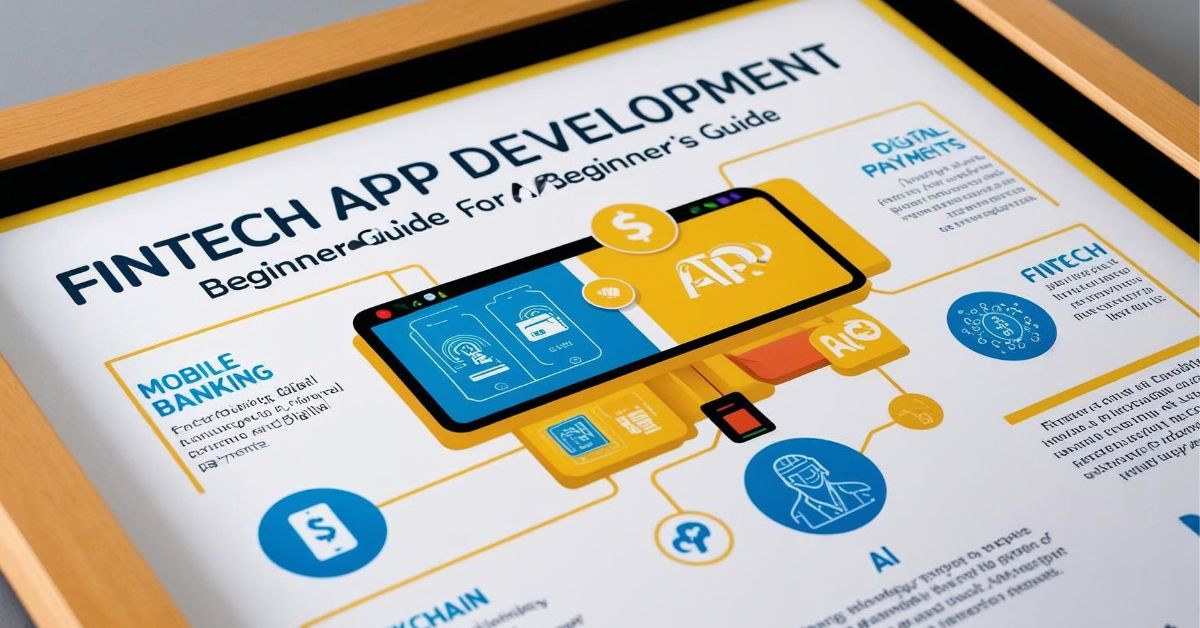
Building a fintech app can feel overwhelming: regulations, security, and complex integrations stand between your idea and launch. The good news: with the right plan you can build a compliant, secure app that users trust and love. This guide explains how to build a fintech app step by step so beginners can go from idea to MVP faster.
Introduction: What is a fintech app and why it matters
A fintech app uses technology to offer financial services—banking, payments, investing, lending, insurance, or personal finance tools—on mobile or web. Fintech apps matter because they make finance accessible, faster, and cheaper for end users and businesses.
What it is
Fintech apps combine secure APIs, data processing, user interfaces, and regulatory controls to handle money and financial data. They connect to banks, payment processors, identity providers, and other services to deliver real-world financial functions.
Why it matters
Fintech apps can improve financial inclusion, reduce costs, and automate tasks. For startups, fintech is a high-value area with clear user needs and steady demand.
How to build a fintech app: step-by-step
1. Define the problem and target user
Start with a specific use case: digital wallet for freelancers, microloans for students, or automated savings. Define your target user, their pain points, and the core value you offer.
2. Choose the fintech niche and model
Pick the business model: B2C, B2B, or B2B2C. Decide service scope: payments, banking-as-a-service, wealth management, lending, or insurance tech.
3. Map features and user journeys
Create a minimum viable product (MVP) feature list and user flows: onboarding, KYC, account linking, transfers, balances, notifications, reporting, and customer support.
4. Select tech stack and architecture
Typical stack: React (web) or React Native/Flutter (mobile), Node.js/Python/Java backend, PostgreSQL or MongoDB, and cloud hosting (AWS/GCP/Azure). Use modular architecture to swap providers easily.
5. Integrate key APIs
APIs speed development. Common integrations: banking APIs (Plaid, TrueLayer), payments (Stripe, Adyen), card issuance (Marqeta), identity verification (Onfido, Jumio), and email/SMS (SendGrid, Twilio).
6. Design for security and compliance
Security and compliance are non-negotiable. Implement encryption, secure authentication (MFA), logging, and role-based access. Plan for regional regulations such as GDPR, PSD2, CCPA, and AML/KYC rules.
7. Build, test, and iterate
Develop the MVP, run security and penetration tests, and conduct beta tests with real users. Iterate based on feedback and analytics.
8. Plan operations and support
Set up customer support, fraud monitoring, incident response, and regular audits. Have a scaling plan for performance and compliance as user numbers grow.
Features, tools, and strategies for a successful fintech app
Core features
- Secure user onboarding and KYC
- Account linking and balance aggregation
- Payments and transfers
- Transaction history and analytics
- Push notifications and alerts
- Two-factor authentication and device management
Recommended tools & integrations
- Banking APIs: Plaid, TrueLayer, Salt Edge
- Payments: Stripe, Adyen, PayPal
- Card issuance: Marqeta, Stripe Issuing
- Identity & KYC: Onfido, Jumio
- Core banking (BaaS): Solarisbank, Unit, Railsr
- Security: Auth0, Okta, Vault
- Cloud/Infrastructure: AWS, GCP, Azure
Strategy tips
- Start with a single market to simplify compliance.
- Use third-party providers for regulatory tasks where possible.
- Protect user trust: make security and transparency visible in the app.
- Measure unit economics early to validate scaling cost-effectively.
Benefits of building a fintech app
- Fast customer acquisition through mobile-first experiences
- Lower operational costs through automation
- Recurring revenue via subscriptions, interchange, or fees
- Data-driven personalization and upsell opportunities
- Ability to reach underserved markets
Comparison: Build vs Buy vs Partner
| Approach | Speed | Cost | Control | Compliance |
|---|---|---|---|---|
| Build in-house | Slow | High initial cost | High | Full responsibility |
| Buy (white-label) | Fast | Medium | Lower | Vendor-managed but shared |
| Partner (BaaS) | Fast | Variable (pay-as-you-go) | Medium | Partner handles many regs |
Expert insight
From industry veterans: prioritize compliance and user trust early. Experts recommend integrating third-party KYC and banking services to reduce time-to-market while keeping critical security controls in-house. Focus on clear UX for financial tasks—confusion causes churn and fraud.
Use cases and real examples
Popular use cases
- Personal finance apps with budgeting and saving tools
- Neobanks offering digital-first checking and cards
- Payment wallets for small businesses
- Microloan platforms using alternative credit scoring
- Robo-advisors for automated investing
Example scenario
A startup builds an expense-management app for freelancers: integrates Plaid for account linking, Stripe for payments, Onfido for KYC, and uses AWS to host backend services. They launch an MVP in one country, validate pricing, then add card issuance through a BaaS partner.
Estimated development costs and timeline
Costs vary widely. Typical ranges for an MVP:
- Freelancer-built prototype: $10k–$30k, 2–4 months
- Small dev team + third-party APIs: $50k–$150k, 4–8 months
- Enterprise-grade product with compliance audits: $200k+, 8–12+ months
Ongoing costs include hosting, API fees, compliance audits, and customer support.
Frequently asked questions
1. How long does it take to build a fintech app?
For a basic MVP expect 3–6 months. More complex products with banking licenses and card issuance take 9–18 months.
2. Do I need a banking license?
Not always. Many startups use Banking-as-a-Service providers or partner with licensed banks to avoid holding a license directly.
3. How do I handle KYC and AML?
Use established KYC providers and implement transaction monitoring rules. Work with legal counsel to align processes with local AML regulations.
4. What are the biggest security risks?
Data breaches, weak authentication, insecure third-party integrations, and inadequate encryption. Regular audits and strong IAM reduce risk.
5. How much does compliance add to the cost?
Compliance can add 10–30% to development and ongoing operating costs depending on market and service complexity.
Conclusion
How to build a fintech app in 2026 comes down to solving a clear financial problem, using reliable APIs, designing for security, and meeting compliance early. Start small, validate fast, and scale with partnerships where it makes sense.
Ready to turn your fintech idea into an MVP? Start by mapping your core user journey and selecting one payments or banking API to integrate first. How Fintech Helps Businesses Improve Cash Flow Management , Best Secure Cloud Hosting Providers for Fintech Startups , Schema Markup for Fintech Services: Complete SEO Guide
Leave a Reply